Cloud seeding technology is a weather modification method used to stimulate precipitation by dispersing substances into clouds. By introducing agents like silver iodide, practitioners aim to accelerate the natural condensation of water vapor into ice crystals that eventually fall as rain or snow. While companies like Rainmaker claim to produce millions of gallons of water through these processes, the industry faces scrutiny regarding environmental safety and actual efficacy. This article examines the mechanics of cloud seeding, the shift toward drone usage, and the ongoing debate over its role in global water security.
How does cloud seeding technology actually work?
Cloud seeding technology functions by speeding up the natural process of water vapor condensing within existing clouds. The process requires specific atmospheric conditions, typically found in mountainous or cold regions like Alaska, to be effective. When seeding agents are introduced, they act as nuclei around which moisture can gather.
The most common method involves dispersing compounds such as silver iodide into cloud formations. These particles encourage the formation of ice crystals. As these crystals grow in size, they become heavy enough to be pulled down by gravity, resulting in precipitation in the form of rain or snow. This method does not create clouds from nothing; rather, it attempts to 'squeeze' more moisture out of clouds that are already present.
The role of seeding agents
The choice of material is critical to the success of the operation. Since the mid-20th century, the industry has transitioned between different substances to achieve better results. The effectiveness of a seeding agent is measured by its ability to nucleate ice at specific temperatures and its stability within the cloud environment.
What is the impact of silver iodide on the environment?
The use of silver iodide is the primary source of contention for environmental advocates and local residents. Critics, such as Cooper Freeman of the Center for Biological Diversity, have raised concerns regarding the lack of downstream monitoring to ensure these chemical compounds do not harm local habitats or human health.
In response to these safety questions, industry leaders have provided data to contextualize the chemical concentration. Augustus Doricko, founder and CEO of Rainmaker, states that his company releases only 20 grams of silver per flight. This amount is distributed across thousands of square kilometers, resulting in ground concentrations measured in parts per quadrillion. According to Doricko, these levels remain significantly below the safety thresholds established by the FDA.
Despite these assurances, the debate continues as companies expand their operations into new territories. The core of the skepticism lies in whether the long-term ecological impact of silver iodide accumulation is fully understood, especially in sensitive ecosystems where water is a primary resource.
How are drones changing the weather modification industry?
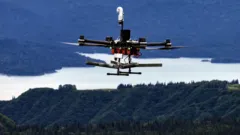
Drones are providing a more targeted and efficient way to conduct cloud seeding compared to traditional aircraft. Modern start-ups are increasingly utilizing unmanned aerial vehicles (UAVs) to fly directly into cloud formations, which is essential because the process cannot occur without pre-existing clouds.
Rainmaker utilizes drones equipped with silver iodide flares. When these flares are ignited, the burning process atomizes the water particles, allowing them to stay suspended in the freezing cloud for several hours. This suspension time is crucial for the particles to transform into crystals and eventually fall as rain. The precision offered by drones allows operators to hit specific areas of a cloud that are most likely to respond to the seeding agent.
Jon Meyer, an assistant state climatologist with the Utah Climate Center, notes that drones offer a "more targeted nature" to these clouds. This technological evolution is seen as a way to modernize an industry that has existed since the 1940s, moving away from the less precise methods of the past.
Is cloud seeding an effective solution for water scarcity?
While the technology is advancing, its ability to solve global water crises is a subject of intense debate. The scale of precipitation produced is often much smaller than the public might imagine. For instance, Rainmaker’s claim of producing 19 million US gallons of water in a three-hour period equates to only approximately 0.01 inch of rain across a 100-square-mile area.
Climatologists suggest that under ideal conditions, cloud seeding can increase precipitation by roughly 5% to 10%. This makes it a supplementary tool rather than a primary solution to drought. The challenge is that while it can bridge small gaps in water supply, it cannot replace the need for comprehensive water conservation and management strategies.
The urgency for such technology is driven by a global water crisis. United Nations Secretary-General António Guterres noted in July that the world is consuming freshwater faster than it can be replenished. With global rivers experiencing their driest period in over three decades, the demand for any method that can marginally increase water availability is rising.
The limits of weather modification
It is vital to understand that cloud seeding is not a tool for creating weather; it is a tool for modifying existing weather. If a region is experiencing a total lack of cloud cover, no amount of seeding will produce rain. This inherent limitation means that the technology is highly dependent on natural weather patterns and seasonal cycles.
What are the new alternatives to silver iodide?
The industry is currently exploring biodegradable and more efficient alternatives to silver iodide to address environmental concerns and improve performance. One notable development comes from Recast Systems in San Francisco, which is testing a different approach to cloud nucleation.
Recast Systems is experimenting with a protein derived from amino acids found naturally in soil. According to CEO Olivia Li, this new seeding agent is biodegradable and may nucleate ice with higher efficiency than traditional silver iodide. While the company currently uses silver iodide in several US states, the goal is to transition to these safer, more effective biological agents.
This shift toward "green" cloud seeding represents the next frontier in weather modification. By utilizing substances that mimic natural processes, companies hope to reduce regulatory hurdles and public opposition while potentially increasing the volume of precipitation they can trigger.
Frequently asked questions
What is the difference between dry ice and silver iodide?
Dry ice was used in the earliest cloud-seeding experiments in 1946, but it was found to be less effective than silver iodide. Dry ice quickly turns into gas, whereas silver iodide provides a more stable structure for ice crystals to form around, making it a superior agent for long-term seeding.
Can cloud seeding cause droughts in other areas?
While a common concern, the current scientific consensus suggests that cloud seeding primarily enhances existing moisture rather than "stealing" it from other regions. However, because the technology is still being studied, the long-term effects on regional moisture distribution remain a topic of ongoing research and debate.
How many countries use weather modification?
More than 50 countries are currently developing or operating weather modification programs. This global interest is driven by increasing water scarcity and the need for innovative ways to manage agricultural and municipal water supplies in arid or drought-prone regions.
Is silver iodide safe for human consumption?
According to Rainmaker CEO Augustus Doricko, the concentration of silver reaching the ground is in the parts per quadrillion, which is well below the safety thresholds set by the FDA. However, environmental groups continue to call for more rigorous downstream monitoring to ensure total safety.
Does cloud seeding create rain from clear skies?
No, cloud seeding cannot create rain from clear skies. The technology requires the presence of existing clouds to work. The process involves injecting agents into clouds to encourage the water vapor already present to condense and fall as precipitation.
Key takeaways
- Cloud seeding can potentially increase precipitation by 5% to 10% under ideal conditions.
- Silver iodide is the most common agent used to encourage ice crystal formation in clouds.
- Modern cloud seeding is increasingly utilizing drones to provide more targeted application.
- New biodegradable protein-based agents are being developed to replace chemical compounds.
- The technology is limited by the requirement of pre-existing cloud cover to function.
Conclusion
Cloud seeding technology stands at a crossroads between innovative potential and environmental caution. While the transition from traditional aircraft to precision drones and the development of biodegradable agents like amino acid proteins show significant progress, the core debate over safety and efficacy remains. As global water security becomes an increasingly urgent issue, the ability to marginally boost precipitation through weather modification may become more vital. However, as experts suggest, these technological interventions must be viewed as supplements to, rather than replacements for, essential water conservation efforts and long-term climate management.