As global water scarcity intensifies, a growing industry of weather modification start-ups is using drones and silver iodide to coax rain from the sky, sparking both hope and environmental concern. Proponents argue these methods are essential for drought relief and agricultural stability in arid regions. However, critics remain wary of the long-term ecological impacts of dispersing chemical agents into the atmosphere. This article examines the technical mechanics of these operations and the complex ethical questions raised by human intervention in natural weather patterns.
How does cloud seeding technology actually work?
Cloud seeding functions by accelerating the natural condensation process that occurs within cloud formations. The process typically involves introducing specific substances, such as silver iodide, into existing clouds to act as nuclei for ice crystals. As these crystals grow and gain mass, gravity eventually pulls them toward the earth as rain or snow, depending on the ambient temperature of the atmosphere.
The effectiveness of this method is highly dependent on specific meteorological conditions. For the technology to be successful, there must already be clouds present; the process cannot create weather from clear skies. Consequently, the most successful operations are often conducted in mountainous or cold regions, such as Alaska, where the atmospheric environment is conducive to crystal formation. Without these pre-existing clouds, companies like Rainmaker find they simply cannot act.
The mechanics of silver iodide dispersal
When using silver iodide, the substance is often released via flares. Once ignited, the burning process atomizes the particles, allowing them to remain suspended within the freezing cloud for several hours. This suspension is critical, as it provides the necessary time for water vapor to latch onto the silver iodide particles, forming the ice crystals required for precipitation.
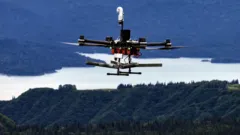
This method of dispersal is designed to ensure the particles stay aloft long enough to complete the transition from vapor to crystal. By using drones to soar directly into these clouds, companies can deploy these flares in a way that maximizes the chance of the particles being caught in the freezing environment necessary for the seeding to take hold.
What is the impact of cloud seeding on water security?
Cloud seeding provides a marginal increase in precipitation rather than a total solution to drought. According to Jon Meyer, an assistant state climatologist with the Utah Climate Center, the technology can squeeze out an additional 5% to 10% of precipitation when conditions are optimal. While this can be helpful in water-stressed regions, it is often described as a "drop in the bucket" when compared to the scale of global water shortages.
To illustrate this scale, Rainmaker's recent claim of producing 19 million US gallons of water in just three hours might sound massive, but that volume equates to only about 0.01 inch of rain across a 100-square-mile area. The urgency of finding water solutions is underscored by global trends. United Nations Secretary-General António Guterres noted in July that the world is consuming freshwater at a rate faster than it can be replenished. This concern is compounded by recent reports indicating that the last five years have seen the driest period for global rivers in more than three decades.
In this context, companies like Rainmaker are targeting regions with extreme scarcity, such as Jordan, where residents may only have access to utility water for a few hours per week. However, critics argue that focusing on weather modification might divert attention from more fundamental needs. Cooper Freeman, the Alaska director of the Center for Biological Diversity, suggests that cloud seeding might act as a distraction from the more urgent necessity of implementing robust water conservation measures.
Is cloud seeding technology safe for the environment?
The use of silver iodide has sparked significant debate regarding its long-term ecological consequences. Environmental advocates, including Freeman, have raised questions about the lack of downstream monitoring to ensure that these silver compounds do not negatively impact local habitats or human populations. Freeman specifically questions how safe these experiments are for both residents and their habitats, noting that it does not appear there was monitoring to verify if the silver iodide impacted the environment following the Homer, Alaska, experiments.
In response to these concerns, industry leaders emphasize the minute scale of the chemical release. Augustus Doricko, founder and CEO of Rainmaker, states that his company releases only 20 grams of silver per flight, which is then distributed across thousands of square kilometers. According to Doricko, the resulting concentration on the ground is measured in parts per quadrillion, a level he asserts is well below the safety thresholds established by the FDA (Food and Drug Administration).
How are drones changing the weather modification industry?
Drones are revolutionizing the industry by providing a more precise and targeted method of cloud interaction compared to traditional aircraft. While planes have been used for decades, the shift toward unmanned aerial vehicles (UAVs) allows for more surgical applications of seeding agents within specific cloud structures.
Jon Meyer has noted that drones offer a more targeted nature to the clouds they aim to influence, which may lead to better responsiveness from the weather systems. This technological evolution is part of a broader trend of innovation in a field that dates back to 1946, when researchers at the General Electric Research Laboratory first used dry ice as a seeding agent. The move toward drones represents a shift from the broad strokes of early aviation-based seeding to a more nuanced, high-tech approach.
The evolution of seeding agents
The history of cloud seeding is marked by a search for the most efficient materials to trigger precipitation. While dry ice was the original agent, silver iodide was discovered to be more effective because it does not dissipate as useless gas as quickly. Today, the industry is looking beyond silver iodide toward even more advanced biological solutions.
Companies like Recast Systems are currently testing a new type of seeding agent made from proteins derived from soil-based amino acids. According to CEO Olivia Li, these protein-based agents are biodegradable, safe, and can nucleate ice with higher efficiency than silver iodide. While still undergoing tests at Texas A&M University, this development could move the industry away from silver iodide as the primary compound. This shift toward organic, biodegradable materials represents the next frontier in making weather modification more environmentally compatible.
FAQ: Cloud seeding technology
Does cloud seeding create rain from nothing?
No, cloud seeding cannot create rain out of clear skies. The technology requires existing clouds to function. The process works by introducing agents into existing clouds to encourage the water vapor already present to condense and fall as precipitation.
How much extra rain can cloud seeding produce?
Cloud seeding is not a massive producer of water. Experts like Jon Meyer indicate that under ideal conditions, the technology can increase precipitation by approximately 5% to 10%. It is a tool for enhancement rather than a primary source of water.
Is silver iodide dangerous to humans?
The safety of silver iodide is a subject of debate. While environmentalists call for more monitoring to check for downstream impacts, companies like Rainmaker argue that the concentration of silver reaching the ground is in the parts per quadrillion, which is well within FDA safety limits.
Why are drones being used instead of planes?
Drones provide a more targeted approach to cloud seeding. They allow operators to navigate specific parts of a cloud more precisely than traditional aircraft, potentially increasing the efficiency and accuracy of the seeding process.
What are the new alternatives to silver iodide?
New research is focusing on biodegradable alternatives, such as proteins made from soil amino acids. Companies like Recast Systems are testing these agents, which may offer higher efficiency and better environmental safety than traditional chemical compounds.
Key takeaways
- Cloud seeding enhances existing clouds to increase precipitation by 5% to 10%.
- Silver iodide is a primary seeding agent used to create ice crystals in clouds.
- Drones allow for more targeted and precise weather modification than airplanes.
- New biodegradable protein-based agents are being developed to replace silver iodide.
- Global water scarcity is driving increased demand for weather modification services.
The future of weather modification
The trajectory of cloud seeding technology is moving toward increased precision and environmental integration. As global water demand continues to outpace natural replenishment, the pressure on governments and private sectors to adopt these technologies will likely grow. However, the industry's long-term viability will depend on its ability to prove both its efficacy and its safety. The transition from heavy chemical use to biodegradable, drone-led operations suggests a sector that is attempting to evolve alongside the environmental concerns it helps to address.