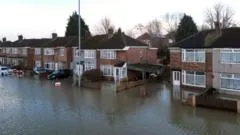
Flood risk uninsurable homes is a growing concern for the UK property market as new constructions are increasingly located in vulnerable areas. Amanda Blanc, CEO of insurance giant Aviva, warns that 115,000 new homes are projected to be built in flood zones over the next decade. With approximately 6.3 million properties in England already identified as being at risk, the escalating frequency of extreme weather poses a systemic threat to mortgageability and long-term asset value. This article examines the scale of the flooding threat, the impact of climate change on insurance viability, and the broader economic implications discussed by Aviva leadership.
How many new homes are being built in flood zones?
Approximately 115,000 new homes are expected to be constructed in flood-prone areas within the next ten years. This projection, highlighted by Aviva CEO Amanda Blanc, suggests a misalignment between current building patterns and the increasing reality of environmental volatility. The risk is not merely a future possibility but a present reality for many recent developments.
According to research conducted by Aviva, one in nine homes constructed between 2022 and 2024 is already classified as being at medium to high risk of flooding. This indicates that even as the housing market attempts to meet demand, a significant portion of new inventory is being placed in high-risk categories from the outset.
The scale of current vulnerability
The Environment Agency has identified that roughly 6.3 million homes and businesses across England are currently at risk of flooding. This massive figure underscores the scale of the challenge facing both the government and the private insurance sector. As more properties enter the market in these zones, the cumulative risk to the national economy grows.
Why is the risk of uninsurability increasing?
The primary driver behind the threat of uninsurable homes is the increasing frequency and severity of extreme weather events caused by global warming. As weather patterns shift, traditional flood maps may no longer accurately reflect the true risk to specific properties, leading to a gap between perceived and actual vulnerability.
The Met Office has provided data suggesting that record-breaking wet winters, such as the one experienced in the UK during 2023-24, are becoming much more common. Specifically, these events have shifted from being once-in-80-year occurrences to once-in-20-year events. This increased frequency directly impacts how insurers calculate premiums and determine whether a property can be covered at all.
Aviva’s research further illustrates this trend with a look toward the mid-century. Nearly one-third of all new homes built in 2024 are projected to face some level of flooding risk by the year 2050. Furthermore, one in seven of these homes is expected to fall into the medium to high-risk category as extreme weather becomes more acute.
What is the government's response to flood risks?
The UK government, through the Department for Environment, Food and Rural Affairs (DEFRA), maintains that significant investments are being made to mitigate these risks. The department emphasizes a dual approach of physical protection and stricter planning regulations.
A spokesperson for DEFRA stated that a record amount of investment has been directed toward protecting nearly 900,000 properties, aiming to prevent billions of pounds in potential flooding damage. This investment is intended to bolster the resilience of existing communities against the increasing threat of water damage.
In terms of future development, the government claims that new planning proposals will serve as a safeguard. These proposals are designed to ensure that new housebuilding projects do not proceed in areas identified as being at high risk of flooding. The stated goal is to facilitate the construction of 1.5 million homes while maintaining safety standards and minimizing environmental exposure.
How do pension volatility and economic policy affect consumers?
Beyond the immediate concerns of housing, Aviva’s leadership has highlighted how economic uncertainty and policy speculation can lead to detrimental financial decisions for individuals. This is particularly evident in the realm of private pensions.
Amanda Blanc noted that speculation surrounding the Chancellor’s Budget has historically led to significant spikes in pension withdrawals. In the past year, Aviva observed withdrawal rates that were 30 times higher than the normal baseline. This surge in activity is often driven by uncertainty regarding tax policies and pension rules, which can lead consumers to make impulsive decisions.
The danger of premature withdrawals
The risk associated with these sudden withdrawals is often permanent. Once a customer takes out a tax-free lump sum from their pension, they generally cannot replace that capital in the same way. This can leave individuals with significantly less retirement income than originally planned, creating long-term financial instability.
Blanc urged the government to avoid "kite flying"—the practice of testing policy ideas through public speculation—ahead of major fiscal events like the upcoming Budget on 28 October. Such speculation can cause investors to hold back or alter their decisions, creating an unstable economic environment.
What role does private capital play in infrastructure?
Despite the challenges posed by climate change and economic volatility, Aviva remains a major investor in the UK's physical and social infrastructure. The company leverages its large capital reserves to support essential services and long-term growth.
Aviva currently invests more than £100 billion in the UK, with £35 billion of that total dedicated specifically to infrastructure projects. These investments span a wide range of sectors, including the construction of hospitals, schools, and wind farms. These projects are designed to provide stable, long-term returns for the company's pension holders and scheme members.
Blanc emphasized that while Aviva is "ready with capital" to support the UK's infrastructure needs, more granular detail is required from the government to transform these investment intentions into reality. This suggests that while the private sector is willing to fund the transition to a more resilient economy, the framework for doing so must be clearly defined.
Frequently asked questions
How many new homes in the UK are at risk of flooding?
Recent research from Aviva indicates that one in nine homes built between 2022 and 2024 are at medium to high risk of flooding. Additionally, nearly one-third of new homes built in 2024 are expected to face flooding risks by 2050.
What makes a home uninsurable?
A home becomes uninsurable when the risk of damage—such as from frequent flooding—becomes too high for insurance companies to price effectively. As extreme weather events become more frequent, properties in high-risk zones may find it impossible to secure affordable coverage.
How is climate change affecting UK weather patterns?
Climate change is increasing the frequency of extreme weather. The Met Office estimates that record-breaking wet winters, which previously occurred once every 80 years, are now occurring roughly once every 20 years due to current levels of global warming.
What are the risks of pension speculation?
Speculation regarding changes to tax or pension policy can cause consumers to withdraw funds prematurely. Aviva reported seeing withdrawal rates 30 times higher than normal during periods of uncertainty, which can lead to long-term financial regret as lost capital cannot easily be replaced.
How much does Aviva invest in UK infrastructure?
Aviva invests over £100 billion in the UK, with £35 billion specifically allocated to infrastructure. These funds support vital sectors including healthcare, education, and renewable energy like wind farms.
Key takeaways
- 115,000 new homes are projected to be built in UK flood zones over the next decade.
- One in nine homes built between 2022 and 2024 is at medium to high flood risk.
- Extreme wet winters are shifting from 80-year to 20-year frequency events.
- Aviva reported pension withdrawal rates 30 times higher than normal due to policy speculation.
- Aviva invests £35 billion of its £100 billion UK portfolio into infrastructure.
Conclusion
The intersection of climate change and housing development presents a significant challenge for the UK's economic stability. As flood risks increase, the potential for a surge in uninsurable properties threatens both individual wealth and the broader mortgage market. While government investment and stricter planning aim to mitigate these dangers, the data suggests a widening gap between construction trends and environmental reality. Addressing this requires not only physical infrastructure investment but also stable economic policies that prevent consumer panic and ensure long-term financial security for both homeowners and pension holders.