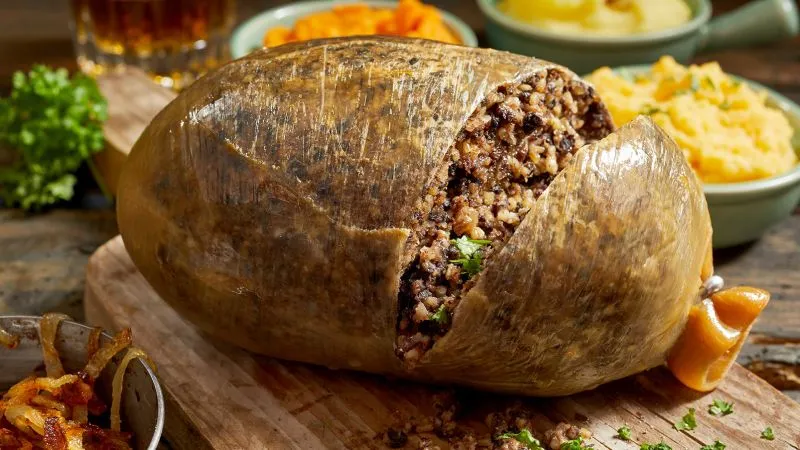
Haggis is the celebrated national dish of Scotland, consisting of a savory mixture of sheep's offal and grains. Traditionally prepared by stuffing diced lung, liver, and heart with oatmeal, suet, onion, and spices into a sheep's stomach, it remains a cornerstone of Scottish culinary identity. While it is a beloved staple for many, including the late chef Anthony Bourdain, it remains prohibited in the United States due to specific livestock regulations. This article explores the complex history, diverse modern applications, and the enduring cultural legacy of this unique dish.
What are the traditional ingredients in haggis?
Haggis is primarily a mixture of diced sheep's offal, including the lung, liver, and heart, combined with oatmeal, beef suet, onion, and a variety of spices. Historically, these raw ingredients were encased in a sheep's stomach and boiled until palatable. While modern production often utilizes synthetic casings rather than natural stomachs, the core nutritional profile remains centered on these ovine or porcine innards.
The resulting dish is characterized by a unique texture and flavor profile. When prepared correctly, it is described as dark, crumbly, and moist, often featuring slightly crispy edges. The inclusion of oatmeal provides a distinct oaty texture that balances the savory, earthy, and spicy notes of the meat. For many, the dish provides a profoundly warming sensation, often described as a "cuddle for the stomach."
The nutritional and economic value of haggis
Beyond its cultural significance, haggis offers a practical and cost-effective meal option. According to Simon Howie of Simon Howie Butchers, who estimates his company accounts for approximately 60% of the two million haggises produced annually, the dish is highly efficient for feeding families. In Scotland, which consumes roughly half of the global volume, haggis typically retails for around £6 ($7.70) per kilogram. This makes it significantly more affordable than many other meat cuts, costing about half the price of beef or a third of the price of Scotch lamb, while maintaining a similar nutritional and calorific density.
Why is haggis banned in the United States?
Haggis is currently classified as culinary contraband in the United States because imports are prohibited by the US Department of Agriculture. This ban, which has been in place since 1971, stems from federal regulations that prohibit the consumption of all livestock lungs. Because authentic, traditional haggis recipes rely heavily on sheep's lung, the dish cannot legally enter the American market. This regulatory barrier means that true, old-school haggis remains as difficult to find in the US as rare luxury items like Cuban cigars.
How has the history of haggis been shaped by myth and poetry?
The historical narrative of haggis is deeply intertwined with the works of the Scottish poet Robert Burns, who famously celebrated the dish in his late 18th-century poem, "Address to a Haggis." Burns referred to the dish as the "Great chieftain o' the pudding race," elevating it from simple peasant fare to a symbol of national pride. This poetic endorsement helped cement the dish's status, often overshadowing its more humble, practical origins.
This romanticization has led to various folk legends. One popular, albeit mischievous, myth suggests that haggis is a "wild wee beastie" with legs of different lengths, causing it to run in circles on Scottish hillsides. While such stories are purely fictional, they reflect the whimsical way the dish has been integrated into Scottish folklore. Etymological research suggests the term "haggis" may even have Old Norse roots, implying that an early version of the oat-and-offal sausage might have been introduced to Britain by Viking settlers.
How is haggis used in modern fine dining and fusion cuisine?
Modern culinary trends have transformed haggis from a traditional boiled dish into a versatile ingredient used in high-end gastronomy. Chefs now deploy its spicy intensity and unique texture in various ways, such as using it as a stuffing for poultry and game birds like venison, or as a component in sophisticated canapés. Its ability to complement leaner meats makes it a popular choice for adding depth to contemporary menus.
The adaptability of haggis has also led to significant cultural crossovers. Food writers and cooks have demonstrated that the dish can be integrated into international recipes without losing its essence. Examples include:
- Lasagna: Using haggis as an alternative to traditional beef or pork ragù.
- Pastilla: Incorporating hand-made haggis into this North African dish, replacing poultry or seafood.
- Filo Pastry: Serving haggis in savory pastries, sometimes paired with blackcurrant sauce.
Furthermore, the dish has seen a resurgence through fusion with other cultural traditions. In Glasgow, the Sikh community pioneered the haggis pakora in the 1990s. This has paved the way for other creative iterations, including haggis samosas, spring rolls, and even quesadillas. Many of these modern versions also include vegetarian alternatives that replace offal with a blend of mushrooms, pulses, and vegetables.
What is the role of haggis in Scottish celebrations?
Haggis remains a central element of Scottish cultural identity, most notably during Burns Night. This annual celebration, held in honor of Robert Burns, typically features the serving of haggis as a centerpiece of the festivities. The dish serves as a link to the past, honoring the rustic, hearty traditions that Burns himself championed against the more refined, "enfeebling" foods of the urban elites during his era.
For many Scots, the connection to the dish is personal and generational. It is viewed not just as a meal, but as a symbol of belonging. Whether enjoyed as a simple meal after a sporting event or served as a gourmet delicacy, haggis continues to be a unifying element of the Scottish larder, maintaining its relevance through both tradition and constant culinary evolution.
Frequently asked questions
What are the main ingredients in haggis?
Haggis is made from sheep's offal, specifically the heart, liver, and lungs. These are mixed with ingredients like oatmeal, beef suet, onions, and various spices. Traditionally, the mixture is encased in a sheep's stomach and boiled, though modern versions often use synthetic casings.
Is haggis legal to eat in the USA?
While it is not illegal for individuals to consume it if they acquire it, the import of haggis into the United States is prohibited. This is due to a 1971 US Department of Agriculture ban on the consumption of livestock lungs, which are a primary ingredient in the dish.
How is haggis traditionally served?
The most traditional way to serve haggis is accompanied by "neeps and tatties," which refers to mashed turnips (neeps) and mashed potatoes (tatties). It is often enjoyed as a hearty, warm meal that reflects Scotland's rustic culinary roots.
Can you find vegetarian haggis?
Yes, vegetarian versions of haggis are widely available. These typically replace the sheep's offal with a combination of vegetables, pulses, and mushrooms to replicate the texture and savory flavor of the original dish, making it accessible to those with different dietary preferences.
What is the significance of Burns Night?
Burns Night is an annual celebration held to honor the Scottish poet Robert Burns. Haggis is the central dish of the evening, often presented with great ceremony to celebrate Scottish heritage and the poet's famous "Address to a Haggis."
Key takeaways
- Haggis is a traditional Scottish dish made from sheep's offal, oatmeal, suet, and spices.
- The United States bans the import of haggis due to regulations regarding livestock lungs.
- Haggis is a versatile ingredient used in everything from chip shops to fine dining.
- The dish is a central component of Burns Night celebrations in Scotland.
- Modern culinary adaptations include haggis pakora and vegetarian versions.
Conclusion
Haggis has evolved from a practical, historical necessity into a profound symbol of Scottish national identity. While its unconventional ingredients once made it a target for ridicule or misunderstanding, its culinary versatility has allowed it to thrive in both traditional settings and modern fine dining. From the poetic celebrations of Burns Night to the creative fusion of haggis pakoras, the dish continues to adapt. Despite international regulatory hurdles, its deep roots in Scottish culture ensure that it remains a cherished and enduring staple of the global culinary landscape.