Pet cemeteries serve as profound indicators of the evolving emotional bonds between humans and their animal companions. As cities like Barcelona move to establish public facilities to accommodate an estimated 7,000 annual burials and cremations, the practice highlights a shift from mere hygienic disposal to ritualized mourning. Historically, these sites have transitioned from providing simple closure to acting as permanent monuments for animals once viewed as mere companions. This article examines the archaeological and sociological significance of pet burials, the historical evolution of animal epitaphs, and the modern struggle to validate pet-related grief.
Why are pet cemeteries becoming a public necessity?
The establishment of public pet cemeteries is increasingly driven by urban density and a significant rise in domestic animal ownership. In Barcelona, for instance, approximately 50% of families own a pet, yet the city supports an estimated 180,000 dogs without a dedicated municipal burial site. Until recently, these services were exclusively managed by the private sector, but rising public demand has forced local governments to intervene.
The move toward municipal funding represents a formal recognition of the role animals play in the urban social fabric. According to Eloi Badia, Barcelona’s Councilor for Climate Emergency and Ecological Transition, the initiative is a direct response to constant public pressure. This shift mirrors a broader global trend where the necessity of managing animal remains is being integrated into formal city planning and ecological transitions.
The economic and social barriers to formal mourning
While public cemeteries provide a structured environment for grief, they are not universally accessible. In the new Barcelona facility, services are estimated to cost approximately €200 ($217) per service. This price point creates a socio-economic divide, meaning that formal, ritualized mourning is not a financial possibility for every pet owner in the city. Consequently, many residents turn to alternative methods of commemoration, such as keeping cremated remains at home, spreading ashes in significant locations, or utilizing digital pet cemeteries and online forums to maintain a connection with their deceased animals.
How has the history of animal burial evolved?
The history of pet cemeteries reveals a transition from utilitarian disposal to deeply personal commemoration. In the 19th century, the options for disposing of deceased animals were often grim; bodies were sometimes discarded in rivers or even sold for meat and skin. While hygiene necessitated moving remains away from living spaces, the leap to creating personalized plots with gravestones marked a significant psychological shift.
Archaeological evidence supports this transition. For example, investigations into a mid-19th-century Toronto residence uncovered a large dog buried in a dedicated personal plot in a back garden. The remains suggested the animal had suffered from degenerative joint disease and infections, indicating it had received significant care in its final weeks. Such findings suggest that even before the rise of formal cemeteries, certain individuals were already choosing labor-intensive burial methods over easier alternatives like household waste disposal.
The timeline of formal pet burial sites
Publicly managed pet cemeteries have a long-standing history in Europe and the Americas, providing a structured landscape for bereavement. Key historical milestones include:
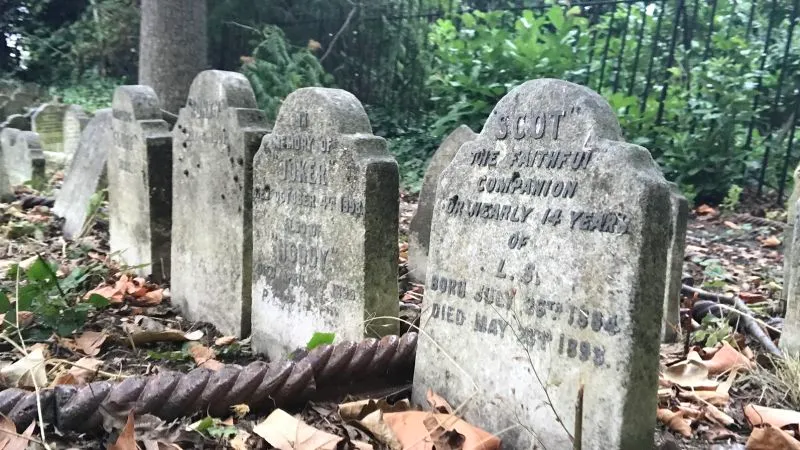
- 1881: The opening of London’s Hyde Park Pet Cemetery, Britain's first public facility.
- 1896: The founding of the Hartsdale pet cemetery in New York.
- 1899: The establishment of the ornate Cimetière des Chiens in Paris.
What do pet gravestones tell us about human-animal relationships?
The language used on pet epitaphs serves as a chronological map of how society perceives animals. By analyzing historic gravestones, researchers can track the movement of animals from the periphery of human life to the very center of the family unit.
In the Victorian era, the 19th century was characterized by descriptions of animals as "loving friends" or "devoted companions." This terminology suggests a high level of affection, yet maintained a distinction between the animal and the human family. However, by the early 20th century, this boundary began to dissolve. Gravestones started featuring family surnames and epitaphs written by "Mummy and Daddy," signaling that pets had officially transitioned into recognized family members.
The spiritual dimension of animal loss
As the relationship deepened, so did the spiritual expectations surrounding death. Mid-20th-century epitaphs often moved beyond simple descriptions of companionship to express a hope for spiritual reunion. A notable example is the 1952 epitaph for a cat named Denny in an east London cemetery, which read, "God bless until we meet again." This suggests that the concept of an afterlife was increasingly extended to include animals, reflecting a profound integration of pets into the human emotional and spiritual experience.
Why is pet grief still a social taboo?
Despite the increasing formalization of pet burials, many individuals still face social repercussions when expressing the depth of their loss. The connection between a human and a pet can be as intense as any human-to-human bond, yet society often fails to provide appropriate outlets for this specific type of mourning.
There remains a lingering stigma that suggests grieving for an animal is less valid than grieving for a person. This can lead to individuals hiding their heartache to avoid judgment. To combat this, organizations like the RSPCA in the UK actively work to reassure the public that they should not feel shame for their grief. Similarly, specialized services like the Blue Cross and the Rainbow Bridge Pet Loss Grief Center provide professional counseling to help navigate the unique complexities of animal bereavement.
Modern legal shifts in commemoration
Legal frameworks are slowly catching up to these emotional realities. In recent years, jurisdictions such as New York have moved to allow the co-burial of cremated animals alongside humans. This legal evolution acknowledges the inseparable nature of many human-animal bonds and paves the way for new, integrated funerary practices that reflect modern family structures.
Key takeaways
- Public pet cemeteries, like the upcoming facility in Barcelona, address high demand in densely populated urban areas.
- Historical epitaphs show animals transitioned from "companions" in the 1800s to "family members" in the 1900s.
- Archaeological finds, such as a 19th-century Toronto dog burial, prove long-standing traditions of individual animal care.
- Social stigma still exists, prompting the need for specialized grief counseling for pet owners.
- Legal changes in places like New York now allow for the co-burial of humans and cremated pets.
FAQ: Pet Cemeteries and Mourning
Why are public pet cemeteries being built now?
Public cemeteries are being established due to increasing demand from pet owners in densely populated cities. In Barcelona, where 50% of families own pets, the lack of municipal facilities has led to a push for public services to manage the estimated 7,000 annual burials and cremations.
How have pet epitaphs changed over time?
Epitaphs have evolved from describing pets as "loving friends" in the 19th century to identifying them as family members in the 20th century. Modern inscriptions often include family surnames and express hopes for a spiritual reunion in the afterlife.
Is pet loss considered a valid form of grief?
Yes, although social stigmas sometimes persist, many professional organizations now recognize pet loss as a significant emotional event. Charities like the Blue Cross provide specific counseling to help individuals navigate the intense heartbreak that follows the death of an animal companion.
Can humans and pets be buried together?
In some jurisdictions, such as New York, it is now legally permissible to co-bury cremated animal remains with humans. This reflects a growing legal and social recognition of the profound, inseparable bonds between people and their pets.
What are the alternatives to pet cemeteries?
For those who cannot afford formal services or prefer other methods, alternatives include keeping cremated remains at home, scattering ashes in meaningful locations, or using digital pet cemeteries and online forums to commemorate their animals.
Conclusion
The evolution of pet cemeteries from simple disposal sites to formal municipal institutions reflects a fundamental shift in the human experience. As we move from viewing animals as mere companions to recognizing them as integral family members, our rituals of mourning must adapt. While economic barriers and social stigmas continue to challenge the universality of these practices, the growing availability of specialized counseling and legal recognition of co-burial highlights a maturing understanding of the human-animal bond. Ultimately, how we treat the dead of our animal companions serves as a mirror to the value we place on them in life.