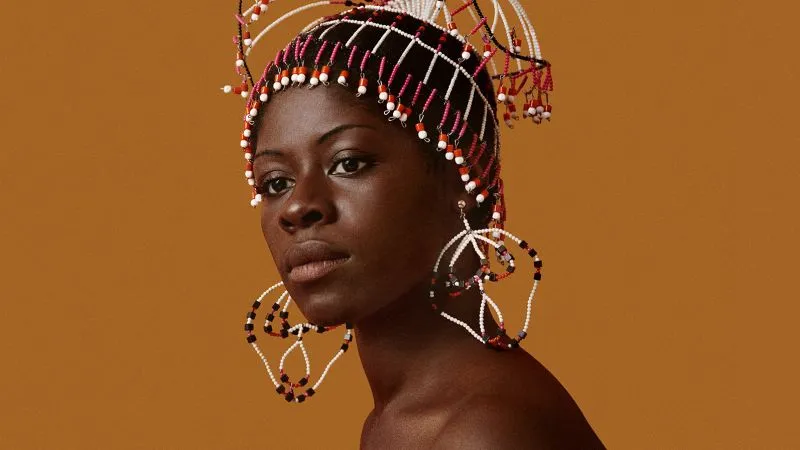
The pioneering activist and photographer, whose work helped shape the aesthetics of a movement, has died at age 85. Brathwaite was a central figure in the Black is Beautiful movement, using his lens to challenge Eurocentric beauty standards and celebrate African heritage. Through his photography, he captured the essence of a generation seeking identity and pride. His influence extended beyond the frame, as he worked to empower Black subjects and redefine how they were perceived by the world. His legacy remains a vital cornerstone of cultural history.
How did Kwame Brathwaite's early life shape his photographic vision?
Kwame Brathwaite was born in 1938 to Barbadian immigrants, growing up in what he referred to as the “People’s Republic of Brooklyn” in New York. His family’s journey through Harlem and the South Bronx provided a cultural backdrop that would later inform his deep focus on Black community and identity. His path toward photography was forged by two distinct, transformative encounters that defined both his technical approach and his social mission.
Brathwaite attended the School of Industrial Art, now known as the High School of Art and Design, which provided the foundational training necessary for his later technical mastery. His evolution from a student to a visionary was driven by moments that connected the medium of photography to the visceral realities of the Black experience.
The dual catalysts of his career
In August 1955, a 17-year-old Brathwaite was profoundly affected by David Jackson’s haunting photograph of the brutalized Emmett Till in his open casket. This moment was a watershed, connecting the power of the image to the urgent, often painful realities of Black life and the struggle for justice. It instilled in him an understanding of how photography could serve as a witness to history.
The second catalyst occurred in 1956, after he and his brother Elombe co-founded the African Jazz Arts Society and Studios (AJASS). While in a dark jazz club, Brathwaite witnessed a young man taking photographs without the use of a flash. This sight made his mind "alight with possibility." Inspired by this, Brathwaite began using a Hasselblad medium-format camera, learning to work with limited light to enhance the visual narrative of his imagery. He did not just want to document a scene; he wanted to master the environment to tell a deeper story.
What was the impact of the 'Black is Beautiful' movement on his work?
By the early 1960s, alongside his colleagues at AJASS, Brathwaite began using his photography and organizing prowess to consciously push back against the whitewashed, Eurocentric beauty standards that dominated the era. He sought to use the camera as a tool for social activism, creating a visual language that celebrated Black aesthetics on their own terms.
Central to this mission was the concept of the Grandassa Models. These were young Black women whom Brathwaite would photograph specifically to celebrate and accentuate their natural features. This was a radical act of visual reclamation. In 1962, AJASS organized “Naturally ’62,” a fashion show held at the Purple Manor, a Harlem club. This show featured the Grandassa Models and became a cornerstone of the movement, continuing to be held regularly until 1992. Through these efforts, Brathwaite helped transition the "Black is Beautiful" ethos from a sentiment into a tangible, documented aesthetic reality.
How did Brathwaite document the legends of jazz and soul?
Brathwaite’s photography was deeply intertwined with the rhythm and atmosphere of Black musical expression. Throughout the 1950s and ’60s, he captured the essence of jazz legends, including Miles Davis, John Coltrane, and Thelonious Monk. His goal was to move beyond the static portrait to capture the very spirit of the performance.
In a 2017 interview with Aperture Magazine, Brathwaite explained his philosophy: “You want to get the feeling, the mood that you’re experiencing when they’re playing. That’s the thing. You want to capture that.” To achieve this, he honed specialized darkroom techniques in a small darkroom in his Harlem apartment. These methods were designed to enrich and deepen how Black skin would appear in his photographs, ensuring that the tonal qualities of his subjects were rendered with a unique dignity and depth that standard processes might have missed.
A global lens on Black music and culture
As his career progressed into the 1970s, Brathwaite’s focus expanded from the jazz clubs of Harlem to broader forms of popular Black music and significant global events. In 1974, he traveled to Africa to document the Jackson Five's tour, capturing the intersection of American pop culture and the African continent. That same year, he photographed the historic “Rumble in the Jungle” boxing match between Muhammad Ali and George Foreman in what is now the Democratic Republic of Congo.
His commissions during this era also saw him documenting a pantheon of music legends, including Nina Simone, Stevie Wonder, Sly and the Family Stone, and Bob Marley. His ability to move between the intimate settings of a music studio and the massive scale of international sporting events cemented his role as a premier chronicler of the Black musical and cultural diaspora.
What is the enduring legacy of Brathwaite's archive?
In recent years, there has been a significant resurgence of interest in Brathwaite’s work among curators, historians, and collectors. His contributions are increasingly recognized as essential pillars of both photographic and cultural history. This renewed appreciation has culminated in major institutional recognition, such as his first major retrospective organized by the Aperture Foundation, which debuted in 2019 at the Skirball Cultural Center in Los Angeles before touring the country.
His work continues to be exhibited in prominent venues, such as the Art Institute of Chicago, which hosted the exhibition “Kwame Brathwaite: Things Well Worth Waiting For.” Even as his health began to fail—noted in a 2021 T Magazine profile—his influence remained steadfast. From his work with the Philip Martin Gallery in Los Angeles to his 2018 commission for The New Yorker, Brathwaite remained an active force in the visual arts until the end of his life.
Frequently asked questions
Who were the Grandassa Models?
The Grandassa Models were young Black women whom Brathwaite photographed to celebrate and accentuate their natural features. They were central to the "Black is Beautiful" movement and participated in the "Naturally '62" fashion show, helping to challenge Eurocentric beauty standards.
What inspired Brathwaite to become a photographer?
Two primary events shaped his path: seeing David Jackson's photograph of Emmett Till in 1955, which demonstrated the power of imagery, and witnessing a photographer working without a flash in a jazz club in 1956, which revealed the artistic possibilities of low-light photography.
Which famous musicians did Brathwaite photograph?
Brathwaite's portfolio includes jazz legends like Miles Davis, John Coltrane, and Thelonious Monk, as well as popular icons such as Nina Simone, Stevie Wonder, Sly and the Family Stone, and Bob Marley.
What was the significance of the "Rumble in the Jungle" to his career?
In 1974, Brathwaite photographed the historic boxing match between Muhammad Ali and George Foreman in the Democratic Republic of Congo, documenting a major global moment in Black sporting and cultural history.
How did Brathwaite's darkroom techniques affect his work?
Working in his Harlem apartment, Brathwaite developed darkroom techniques specifically designed to enrich and deepen the appearance of Black skin, ensuring his subjects were captured with enhanced visual depth and dignity.
Key takeaways
- Kwame Brathwaite was a central figure in the "Black is Beautiful" movement and the creator of the Grandassa Models concept.
- He used photography to challenge Eurocentric beauty standards by celebrating natural Black features and aesthetics.
- His work documented a vast array of musical legends, from jazz icons like Miles Davis to soul and reggae stars like Bob Marley.
- He mastered low-light photography and developed unique darkroom processes to honor and enhance Black skin tones.
Conclusion
Kwame Brathwaite was more than a photographer; he was a visual architect of Black identity. Through his lens, the "Black is Beautiful" movement transitioned from a social sentiment into a powerful, documented aesthetic reality. From the jazz clubs of Harlem to the global stage of the "Rumble in the Jungle," his work captured the soul of a movement and the brilliance of its icons. His legacy lives on through his archive, continuing to inspire a world that is still learning to see the profound beauty in natural heritage and cultural authenticity.