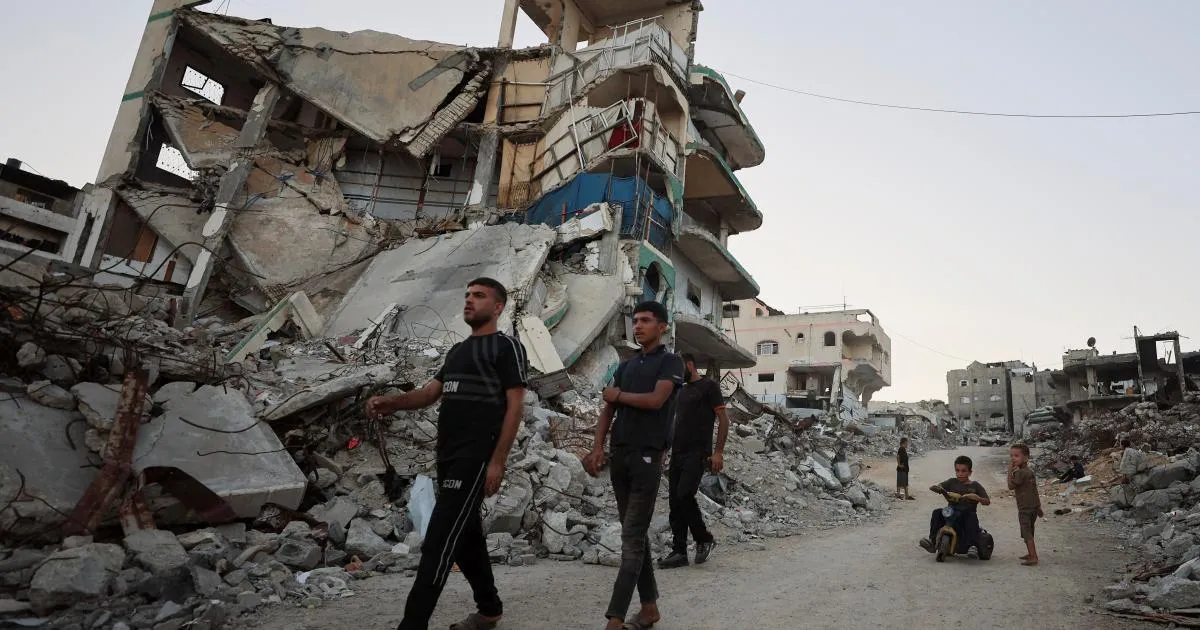
Palestinian two-state solution support has risen significantly, even within the devastated Gaza Strip, according to recent polling data. While many Israelis believe Palestinians reject diplomacy, Arab Barometer surveys from 2025 indicate that a majority now favor a two-state solution over armed resistance or single-state models. In Gaza, support for two states rose from 54% in 2023 to 64% in 2025. This shift suggests a growing pragmatism among a population facing extreme humanitarian crises. This article explores the evolving political preferences in Gaza and the West Bank, the humanitarian realities driving these views, and the widening gap between Israeli perceptions and Palestinian realities.
Why is there growing support for a two-state solution among Palestinians?
A significant majority of Palestinians now view diplomatic negotiations as the most viable path to resolving the conflict, moving away from the preference for armed resistance. Data from the Arab Barometer and the Palestinian Center for Policy and Survey Research (PCPSR) reveals that the two-state model is increasingly seen as the preferred outcome, even amidst intense military conflict.
In the West Bank, 56% of respondents identified a two-state solution as their preferred method for ending the conflict, marking a seven-point increase from 2023. The trend is even more pronounced in Gaza. Despite the immense destruction caused by recent warfare, support for a two-state solution in the Gaza Strip climbed from 54% in October 2023 to 64% by October 2025. Conversely, the 'other' category—often a proxy for support for armed struggle—fell sharply in Gaza from 20% to just 7% in the same period.
The role of younger generations in shifting political views
The shift toward diplomacy is notably driven by younger Palestinians. In 2023, those aged 18 to 29 were significantly less likely to favor a two-state solution than older cohorts. However, by late 2025, this age gap had effectively closed, with younger Palestinians showing levels of support for the two-state model equal to those 30 and older. Furthermore, support for the 'other' option among the youth dropped from 27% to 14%, suggesting a generational pivot toward political realism.
How do Gazans view the prospect of normalization and reconstruction?
Gazans are exhibiting a high degree of pragmatism, showing a willingness to accept diplomatic shifts if they lead to tangible Palestinian self-determination. While overall support for Arab states normalizing ties with Israel was low (11%) in the broader Palestinian territories, the sentiment in Gaza is distinct.
Half of the Gazans surveyed would support the normalization of diplomatic relations between Arab states and Israel, provided that such a process includes concrete progress toward Palestinian sovereignty. This pragmatic stance is coupled with a surprising desire for stability; despite the scale of the catastrophe, a majority of Gazans expressed that they would not leave the territory if they had the choice. This contrasts with the fatalism often attributed to populations in extreme crisis, suggesting a deep-seated commitment to rebuilding their homeland.
What are the current humanitarian and security conditions in Gaza and the West Bank?
The humanitarian situation in Gaza remains catastrophic, characterized by massive displacement and a near-total lack of essential services. According to the Arab Barometer survey conducted in October 2025, the scale of the crisis is profound.
- Displacement: 85% of Gazans reported being displaced at least once since October 2023, with 70% of those individuals being uprooted three or more times.
- Food Security: Over 20% of Gazans reported going most or all of the week without food, while 61% saw household employment lost due to the war.
- Infrastructure: Access to basic utilities is minimal, with only 9% of Gazans having access to electricity and 6% having access to fuel or cooking gas.
- Education: For households with school-age children, 31% reported that none of their children currently have access to education.
In the West Bank, while access to services is higher than in Gaza, security and economic conditions are rapidly deteriorating. Only 58% of West Bank Palestinians described their neighborhoods as safe, a decline of 16 percentage points since late 2023. Economic hardship is widespread, with 92% of respondents describing the economic situation as 'bad' or 'very bad.' This has led to increased food insecurity, with 51% of respondents noting they could not afford enough food to last the month.
Why is there a disconnect between Israeli perceptions and Palestinian views?
A dangerous perception gap exists between the Israeli public and the Palestinian population, which often stalls diplomatic efforts. Israeli voters frequently believe that Palestinians are fundamentally opposed to peace, a view that shapes the political landscape in Israel.
A Tel Aviv University poll in July 2025 highlighted this disconnect: 72% of Jewish Israelis believed Palestinians were moderately or very opposed to peace negotiations, and over 80% believed Palestinians viewed peace as unachievable. However, these findings are contradicted by Palestinian polling. The Arab Barometer data shows that rather than rejecting peace, Palestinians are increasingly looking for a viable political framework—specifically the two-state solution—to achieve it. This misalignment suggests that Israeli hard-line political stances are often based on a misunderstanding of Palestinian political aspirations.
What is the current status of Palestinian political leadership?
Confidence in established Palestinian political factions has reached a low point, as both Hamas and the Palestinian Authority (PA) face intense scrutiny from their constituents. Palestinians increasingly view both entities as having failed to provide security or economic stability.
In the West Bank, two-thirds of respondents rated the Palestinian Authority’s ability to provide security as 'bad' or 'very bad.' This lack of confidence is not limited to security; the economic failures and the inability to halt the deterioration of living standards have led to a widespread desire for political renewal. Palestinians are not necessarily looking for a specific party, but rather for a new political order that can effectively manage the requirements of statehood and provide the safety and dignity that current leadership has failed to deliver.
FAQ: Palestinian Political Trends
Does Gaza support a two-state solution?
Yes, support for a two-state solution in Gaza has risen significantly. According to Arab Barometer data, support grew from 54% in October 2023 to 64% in October 2025, indicating a pragmatic shift toward diplomacy among Gazans despite the ongoing conflict.
Do Palestinians want to emigrate due to the war?
While many have considered it, most Gazans wish to stay. A majority of Gazans stated they would not leave Gaza right now if they could, expressing a desire to remain and participate in the rebuilding of their territory.
How do younger Palestinians view the conflict differently?
Younger Palestinians (ages 18-29) are increasingly aligned with older generations in favoring a two-state solution. By late 2025, their preference for diplomacy had matched that of older cohorts, while their support for 'other' options, like armed resistance, had dropped significantly.
Is the West Bank experiencing economic stability?
No, the economic situation in the West Bank is deteriorating. Approximately 92% of respondents described the economic conditions as 'bad' or 'very bad,' with many reporting food insecurity and a lack of resources to meet basic needs.
What is the Israeli perception of Palestinian peace intentions?
Israeli perceptions often conflict with Palestinian polling. A Tel Aviv University poll showed that over 70% of Jewish Israelis believe Palestinians are opposed to peace negotiations, a view that contrasts with the rising support for diplomatic solutions in Palestinian surveys.
Key takeaways
- Palestinian support for a two-state solution rose to 64% in Gaza by October 2025.
- Younger Palestinians are increasingly favoring diplomatic negotiations over armed resistance.
- Most Gazans express a desire to remain in their territory to help rebuild.
- Israeli public perception often incorrectly assumes Palestinians reject peace negotiations.
- Economic and security conditions in the West Bank are rapidly declining.
Conclusion
The political landscape in the Palestinian territories is undergoing a significant transformation. Despite the profound humanitarian suffering in Gaza and the deteriorating security in the West Bank, there is a clear trend toward political realism and a preference for a two-state solution. The growing pragmatism among Gazans and the shifting views of the younger generation offer a potential foundation for future negotiations. However, for these shifts to matter, the profound disconnect between Israeli perceptions and Palestinian aspirations must be addressed, and any political path forward must offer a genuine, just, and stable framework for Palestinian statehood and security.