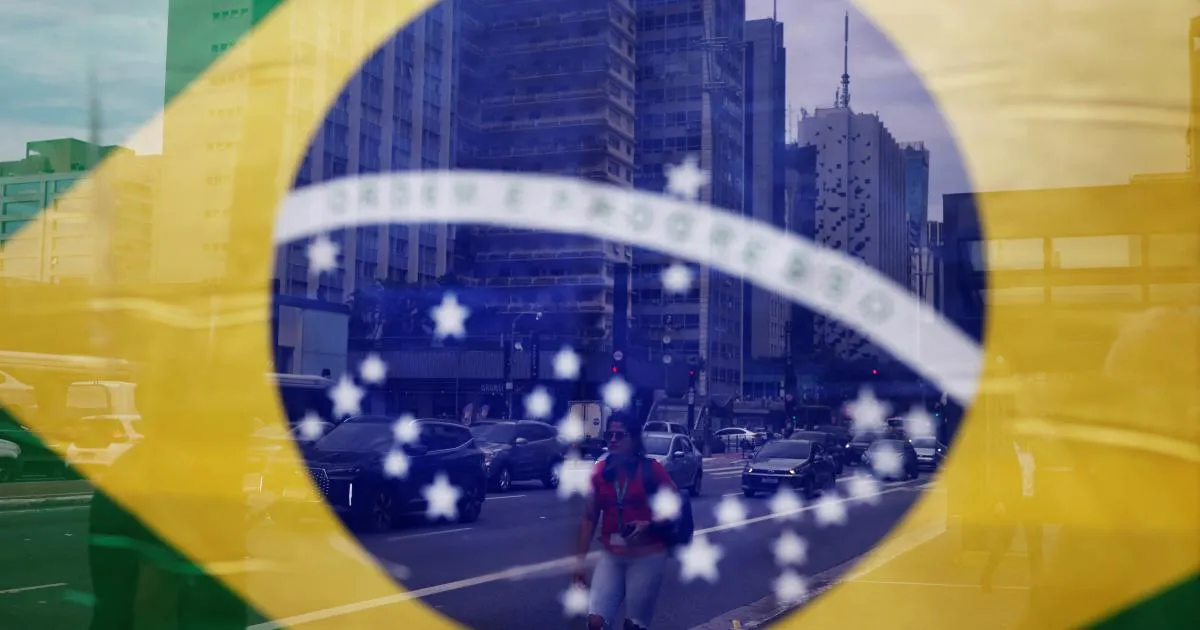
Brazil's election, beginning with the first round of voting on October 4, 2026, offers voters a choice between two radically different political visions. The contest pits Luiz Inácio Lula da Silva against Flávio Bolsonaro, representing the Latin American left and the hard-right respectively. While the candidates debate foreign policy alignment—ranging from strategic autonomy with China to close ties with the United States—they both assume Brazil retains the freedom to choose its path. However, deep-seated fiscal constraints, fragmented security institutions, and a judicial corruption scandal threaten to undermine the country's global influence regardless of the winner. This article examines the domestic vulnerabilities eroding Brazil's geopolitical autonomy.
What are the competing visions in Brazil's election?
The upcoming presidential race is defined by a fundamental disagreement over Brazil's geopolitical orientation and its relationship with global superpowers. On one side, Luiz Inácio Lula da Silva seeks to maintain or expand his fourth term by emphasizing strategic autonomy, a policy that involves strengthening ties with China and other multilateral partners. On the other side, Flávio Bolsonaro, the son of the former president Jair Bolsonaro, advocates for a foreign policy closely aligned with the administration of Donald Trump in the United States.
Despite these divergent paths, both candidates operate under the shared assumption that Brazil still possesses the sovereign capacity to dictate its own international strategy. This optimism overlooks the reality that Brazil's ability to bargain effectively on the world stage is being hollowed out by internal instability. While Brazil's vast natural resources and distance from active global conflicts provide significant leverage, the country's actual autonomy is increasingly being restricted by the influence of major powers like the U.S. and China.
The candidates and their geopolitical stakes
The choice between Lula and Flávio Bolsonaro is not merely about domestic management but about how Brazil interacts with the shifting global order. Lula's approach relies on a multipolar worldview, whereas the Bolsonaro platform seeks to anchor Brazil within a specific Western-aligned bloc. However, as domestic institutions weaken, the capacity to execute either vision becomes increasingly fragile.
How is Brazil's fiscal situation impacting its global standing?
Brazil's economic capacity to fulfill international commitments is being severely constrained by mounting debt and rigid spending requirements. Although the economy is substantial—comparable to Canada's and larger than Spain's—the government's ability to direct funds toward strategic priorities is limited. According to the analysis by Matias Spektor, more than 90 percent of the federal government’s non-interest spending is mandatory, leaving very little room for discretionary investments in critical sectors like infrastructure.
The financial pressure is further compounded by high debt levels and interest rates. The International Monetary Fund has projected that Brazil’s government debt will reach approximately 98 percent of GDP by the end of 2026. With real interest rates hovering around ten percent, the cost of servicing this debt consumes resources that could otherwise be used to bolster national security or fund the development of the country's vast reserves of critical minerals. This fiscal paralysis makes it difficult for Brazil to transform its natural wealth into geopolitical strength.
Why is domestic fragmentation hindering national security?
The inability of Brazilian state agencies to coordinate effectively has created a vacuum that transnational criminal organizations are rapidly filling. Security policy in Brazil is notoriously fragmented, split among federal and state police, intelligence agencies, the armed forces, and various prosecutors. This lack of a central authority means that no single entity can effectively set priorities or mobilize resources quickly to combat organized crime.
This institutional fragmentation has direct international consequences. As Brazil struggles to control its own territory, other nations are beginning to take charge of the security agenda within Brazilian borders. For instance, the Trump administration has designated prominent Brazilian criminal groups, such as the Primeiro Comando da Capital and Comando Vermelho, as terrorist organizations. This move allows the United States to use its own financial and legal tools to combat gangs operating from Brazilian soil, effectively turning Brazil into the object of foreign security policies rather than the author of its own.
The struggle for territorial control
The scale of the challenge is immense, involving the management of a nearly 5,000-mile coastline and over 1,500 clandestine airstrips in the Amazon. Without the fiscal or institutional capacity to secure these areas, Brazil's sovereignty is being eroded by the very criminal networks it cannot contain.
What role does corruption play in eroding Brazil's credibility?
Corruption has transitioned from a series of specific corporate scandals to a systemic crisis involving the very institutions meant to uphold the rule of law. While past scandals involving Petrobras and construction firms damaged Brazil's ability to project influence through development, a new scandal involving the Supreme Court threatens the fundamental durability of the state's commitments. Allegations that members of the judiciary received side payments and personal favors from banking interests have cast doubt on the court's impartiality.
For international partners, this creates a profound sense of uncertainty. The credibility of a nation's foreign policy depends on the belief that agreements made today will be honored by future administrations. When the judiciary—the ultimate guarantor of legal stability—is under suspicion, foreign governments and firms are likely to hedge their bets. Instead of committing to ambitious, long-term projects in energy or infrastructure, they may demand more stringent guarantees or opt for less risky, lower-impact arrangements.
How will the election outcome affect the judiciary?
The winner of the 2026 election will inherit a judiciary in crisis and will possess the significant power to reshape it. The president has the authority to appoint at least three of the 11 Supreme Court justices, a tool that could be used to either restore institutional integrity or further politicize the court.
The political stakes are high: Flávio Bolsonaro has promised to confront the court that convicted his father, while figures close to Lula have already been drawn into ongoing investigations. This tension ensures that the judiciary will remain a central battlefield in Brazilian politics, further complicating the country's ability to present a stable and predictable face to the world.
FAQ: Brazil's political and economic landscape
What is the main choice in the 2026 Brazilian election?
Voters are choosing between Luiz Inácio Lula da Silva, who represents the left and advocates for strategic autonomy and ties with China, and Flávio Bolsonaro, who represents the hard-right and seeks close alignment with the United States. The election will determine Brazil's geopolitical direction.
Why is Brazil's debt a concern for its foreign policy?
Brazil's debt is projected to reach 98 percent of GDP by the end of 2026. High interest rates make servicing this debt extremely expensive, diverting funds away from strategic investments in infrastructure and national security that are essential for maintaining global influence.
How does organized crime affect Brazil's sovereignty?
Because Brazil lacks the coordination and funds to control vast criminal networks, foreign powers like the U.S. are increasingly intervening in Brazil's security matters. This shifts Brazil from being an active leader in regional security to a subject of foreign policy decisions.
What is the impact of the Supreme Court scandal?
The scandal involving alleged corruption within the Supreme Court undermines the legal certainty required by international partners. This makes foreign investors more cautious, leading them to seek higher guarantees or avoid large-scale, long-term investments in the country.
Can the next president fix Brazil's structural problems?
While a new president can appoint Supreme Court justices and set new priorities, the underlying issues—such as mandatory spending, institutional fragmentation, and deep-seated corruption—are structural. The election alone is unlikely to resolve these deep-seated vulnerabilities.
Key takeaways
- The 2026 election pits Lula's strategic autonomy against Flávio Bolsonaro's pro-U.S. alignment.
- Brazil's debt is expected to reach 98% of GDP by late 2026, limiting strategic spending.
- Institutional fragmentation prevents effective coordination against transnational criminal organizations.
- Judicial corruption scandals are eroding the international credibility of Brazil's long-term commitments.
Conclusion
Brazil stands at a crossroads where its immense potential is being stifled by internal decay. The upcoming election offers a choice of direction, but neither candidate has presented a viable roadmap to repair the country's broken machinery. Between a rigid fiscal framework that prevents strategic investment and a fragmented security apparatus that invites foreign intervention, Brazil's capacity to act as a truly autonomous global player is diminishing. Unless the state can restore its ability to implement and protect its promises, its vast resources will continue to be overshadowed by its domestic instability.