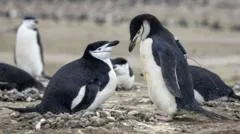
The chinstrap penguin decline on Zavodovski Island has reached alarming levels, with researchers reporting a 63% drop in occupied nests between 2011 and 2025. This significant loss has stripped the remote volcanic island of its status as the world's largest penguin colony. According to the British Antarctic Survey (BAS), the population collapse is driven by climate-induced shifts in food availability. While chinstrap numbers have plummeted, macaroni penguin populations are reportedly thriving due to their dietary flexibility. This article examines the environmental drivers of this decline, the impact of rising ocean temperatures on krill, and the changing ecosystem of the South Sandwich Islands.
Why has the chinstrap penguin population declined so sharply?
The chinstrap penguin decline is primarily attributed to the disappearance of their specialized food source due to warming ocean temperatures. Aerial surveys and research conducted by the British Antarctic Survey (BAS) reveal that the number of occupied nests on Zavodovski Island fell by 63% when comparing 2025 data to 2011 levels. This rapid reduction suggests that the species is struggling to adapt to the environmental shifts occurring in the South Sandwich Islands.
Researchers have identified a direct link between rising sea temperatures and the migration of krill, the primary dietary staple for chinstrap penguins. As the waters warm, the krill populations have moved further south toward the Antarctic continent. This movement creates a geographical mismatch; the chinstrap penguins are unable to follow their food source because they are constrained by sea-ice cover to the south and a lack of suitable nesting islands in the new foraging zones.
The role of dietary specialization
Unlike some of their neighbors, chinstrap penguins are considered specialists. Their survival is heavily dependent on a specific type of krill found in cooler waters. When these waters warm, the biological availability of their food drops significantly, leaving the colonies on Zavodovski Island vulnerable to starvation and reduced breeding success.
How is climate change altering the Antarctic ecosystem?
Climate change is driving a fundamental shift in community composition within Antarctic ecosystems, as evidenced by the diverging fates of different penguin species. While the chinstrap penguins are struggling, the macaroni penguins on the same island are experiencing a population increase. This phenomenon represents what Professor Norman Ratcliffe, the lead researcher, described as the biggest change in community composition ever observed at a single Antarctic location.
The disparity between the two species lies in their adaptability. Macaroni penguins possess a broader and more flexible diet, allowing them to pivot when primary food sources become scarce. Tracking data from the study indicates that macaroni penguins have begun foraging in the warmer waters to the northeast of Zavodovski Island. In these areas, they are likely supplementing their diet with fish and other crustaceans, a strategy that the more rigid chinstrap penguins cannot employ.
What other environmental factors were investigated?
Scientists investigated several local environmental stressors to determine if volcanic activity or interspecies competition played a role in the chinstrap penguin decline. Zavodovski Island is a rugged, volcanic landscape, and the nesting sites are located in the shadow of Mount Curry, also known as Mount Asphyxsia. The area is characterized by intense volcanic fumes, with locations such as Stench Point and Noxious Bluff receiving names due to the overwhelming scent of the crater.
While the volcanic environment is extreme, the timing of the penguin decline does not align with major volcanic events. Mount Curry's last significant eruption occurred in 2016, yet the decline in chinstrap nests has been a steady, ongoing trend since 2011. This suggests that while the volcanic fumes and guano create a harsh environment, they are not the primary drivers of the population collapse.
Competition with marine mammals
The research team also considered whether competition for food with migrating humpback whales was a contributing factor. While humpback whales consume massive quantities of krill, the relationship is complex. Whales actually assist in krill production by fertilizing marine plants with their waste, which in turn supports the krill population. Consequently, the researchers concluded that a broader, climate-driven shift in the ocean's food supply is a more likely culprit than direct competition with whales.
What was the methodology used to conduct this research?
The British Antarctic Survey utilized advanced technology to overcome the extreme challenges of conducting fieldwork in the South Sandwich Islands. Reaching the island required a 15-day sailing expedition to access the remote archipelago. Once on site, the team employed drones and aerial photography to conduct wide-scale surveys of the nesting colonies, which provided the data necessary to calculate the percentage of occupied nests.
To gain deeper insights into the movement and foraging habits of the birds, researchers fitted tracking devices to 20 individual penguins. This data allowed the team to map exactly where the birds were traveling to find food and how different species were utilizing the surrounding waters. This combination of satellite imagery and direct field observation provided a comprehensive view of the ecological crisis unfolding on the island.
Where is the world's largest penguin colony located now?
Zavodovski Island has officially lost its title as the home of the world's largest penguin colony due to the massive reduction in chinstrap numbers. The title has now moved to Cape Adare, located in the Ross Sea on the opposite side of the Antarctic continent, more than 5,000km away. This shift highlights the volatile nature of Antarctic biological hotspots as climate change continues to redistribute species across the globe.
The loss of the colony's status on Zavodovski is a significant indicator of how rapid warming is impacting sensitive ecosystems. The transition from a chinstrap-dominated landscape to one where macaroni penguins are more prominent serves as a biological warning of the changing conditions in the Southern Ocean.
Frequently asked questions
Why are macaroni penguins thriving while chinstraps decline?
Macaroni penguins are more adaptable because they have a more flexible diet. While chinstraps rely heavily on specific krill in cool waters, macaroni penguins can forage in warmer waters and supplement their diet with fish and other crustaceans, allowing them to survive shifting food supplies.
Is volcanic activity causing the penguin deaths?
Volcanic activity is likely not the primary cause. Although Mount Curry is an active volcano that emits strong fumes, the chinstrap penguin decline has been steady since 2011, whereas the last major eruption was in 2016, suggesting climate change is the dominant driver.
How much has the chinstrap population actually dropped?
According to the British Antarctic Survey, there has been a 63% decrease in the number of occupied chinstrap penguin nests on Zavodovski Island between 2011 and 2025, marking an alarming decline for the species.
What is the impact of warming oceans on krill?
Rising ocean temperatures cause krill to move southwards toward cooler waters. This movement makes it difficult for specialized predators like chinstrap penguins to access their food, as they are limited by sea-ice cover and a lack of suitable nesting islands.
Where is the largest penguin colony in the world?
The title of the world's largest penguin colony is currently held by Cape Adare in the Ross Sea. This site is located more than 5,000km away from Zavodovski Island, which lost its status following the recent population decline.
Key takeaways
- Chinstrap penguin nests on Zavodovski Island declined by 63% between 2011 and 2025.
- Warming ocean temperatures have caused essential krill food supplies to move southwards.
- Macaroni penguins are thriving due to their ability to eat a more varied diet.
- Zavodovski Island is no longer the world's largest penguin colony.
- Cape Adare in the Ross Sea now holds the title for the largest colony.
The changing face of the Antarctic ecosystem
The situation on Zavodovski Island serves as a stark illustration of the rapid environmental shifts occurring in the Antarctic region. The decline of the chinstrap penguin is not merely a localized event but a symptom of a larger, climate-driven transformation of marine food webs. As specialist species struggle to keep pace with warming waters and migrating prey, more adaptable species are poised to take their place. This reconfiguration of biodiversity underscores the urgent need to understand and address the impacts of climate change on the planet's most sensitive and remote ecosystems.