The chinstrap penguin population decline on Zavodovski Island has reached alarming levels, with researchers reporting a 63% drop in occupied nests since 2011. Once home to the world's largest penguin colony, the remote volcanic island near Antarctica has seen its numbers plummet due to shifting ocean temperatures and food scarcity. While the chinstrap species struggles, macaroni penguins on the same island are thriving due to dietary flexibility. This article examines the findings of the British Antarctic Survey, the role of climate change in shifting krill populations, and the broader ecological transformations occurring in the South Sandwich Islands.
Why has the chinstrap penguin population declined so drastically?
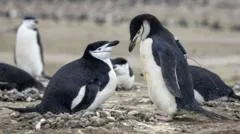
The primary driver behind the chinstrap penguin population decline is the rapid warming of Antarctic waters, which has disrupted the availability of their essential food source. According to the British Antarctic Survey (BAS), there were 63% fewer occupied chinstrap penguin nests in 2025 compared to the levels recorded in 2011. This massive reduction has stripped Zavodovski Island of its status as the site of the world's largest penguin colony.
Researchers have identified a direct link between rising ocean temperatures and the migration of krill, the staple diet of the chinstrap penguin. As the water warms, the krill populations are moving southward toward cooler regions. However, the penguins are unable to follow their food source effectively due to a combination of limited sea-ice cover and a lack of suitable nesting islands in those southern reaches. This creates a geographical trap where the birds remain in warming waters while their primary nutrition moves out of reach.
The Specialist Diet Vulnerability
Prof. Norman Ratcliffe, who led the research, highlighted that the chinstrap's "specialist diet" makes them particularly vulnerable to environmental shifts. Unlike more generalist species, chinstraps rely heavily on specific krill populations that are highly sensitive to temperature fluctuations. When the thermal boundaries of these marine organisms shift, the chinstrap's survival is immediately threatened, potentially moving the species toward official endangered status.
How are macaroni penguins thriving in the same environment?
While chinstrap numbers have collapsed, macaroni penguins on Zavodovski Island are experiencing a dramatic increase in population. This divergence in species health is attributed to the macaroni penguin's ability to adapt its foraging habits and dietary preferences. While the chinstraps are tethered to a specific food source that is migrating, the macaroni penguins have demonstrated significant ecological flexibility.
Tracking data collected by the BAS team reveals that macaroni penguins have begun foraging in the warmer waters located to the northeast of the island. In these warmer zones, they are able to supplement their diet with fish and various other crustaceans. This ability to pivot from a krill-heavy diet to a more diverse menu allows them to remain stable even as the local ecosystem undergoes radical changes. This shift represents what Prof. Ratcliffe describes as the "biggest change in community composition ever observed at a single location in Antarctica."
What role does volcanic activity play on Zavodovski Island?
Zavodovski Island is a volatile environment characterized by its extreme terrain and active volcanic presence. The island is home to Mount Curry, also known as Mount Asphyxsia, an active volcano that contributes to the island's harsh living conditions. The proximity of the penguin colonies to the volcanic crater means that birds must nest in areas frequently affected by sulfurous fumes and volcanic gases.
The research team noted that the environment is incredibly pungent, with sites downwind of the crater receiving names like "Stench Point," "Noxious Bluff," and "Asphyxia Plain." Prof. Ratcliffe described the combination of volcanic emissions and massive quantities of penguin guano as making the island one of the smelliest places on Earth, comparing the atmosphere to a "penguin Mordor." However, despite the intense volcanic activity, researchers have ruled out recent eruptions as the cause of the penguin decline. While Mount Curry had a major eruption in 2016, the decline in chinstrap numbers has been a steady, ongoing trend since 2011, pointing toward climate-driven factors rather than geological ones.
Could competition with whales be affecting penguin numbers?
Scientists also investigated whether competition for food with other marine megafauna, such as migrating humpback whales, was contributing to the chinstrap penguin population decline. Because humpback whales consume vast quantities of krill, it was theorially possible that they were outcompeting the penguins for a dwindling resource. However, the evidence suggests a more complex relationship between these species.
Interestingly, humpback whales may actually provide a net benefit to the krill ecosystem. The whales contribute to krill production by fertilizing marine plants with their waste, which in turn provides more food for the krill. This suggests that the decline in chinstraps is not a simple matter of one species eating the food of another, but rather a fundamental, climate-driven shift in the entire marine food web that is reducing the total available energy in the system.
How was this extreme research conducted?
Conducting fieldwork on Zavodovski Island is considered one of the most difficult scientific endeavors in the world due to its isolation and extreme weather. The British Antarctic Survey team had to undertake a 15-day sailing expedition just to reach the archipelago. Once on the island, the researchers utilized a combination of high-tech tools and traditional field methods to gather data on the avian inhabitants.
The methodology included:
- Aerial Surveys: Using drones and aerial photography to map nesting sites and estimate population density across the rocky terrain.
- Satellite Imagery: Analyzing long-term changes in ice cover and habitat availability.
- Bio-logging: Fitting tracking devices to 20 individual birds to monitor their movement and foraging patterns.
This rigorous approach allowed the team to confirm that the chinstrap population, which was estimated at 600,000 in 2011, has seen a massive reduction in occupied nests, fundamentally altering the biological makeup of the South Sandwich Islands.
FAQ: Chinstrap Penguin Population Decline
What is the current status of the world's largest penguin colony?
Zavodovski Island, which was once home to the world's largest colony with approximately 600,000 chinstrap penguins, has lost this title. The largest penguin colony is now located at Cape Adare in the Ross Sea, which is more than 5,000km away from Zavodovski.
Why are macaroni penguins not declining like chinstraps?
Macaroni penguins are more adaptable because they possess a broader and more flexible diet. While chinstraps rely on specific krill that are moving south due to warming, macaroni penguins have been observed foraging in warmer waters to eat fish and other crustaceans.
Is volcanic activity causing the penguin deaths?
No, volcanic activity is not the primary cause of the decline. Although Mount Curry is an active volcano that creates a harsh, smelly environment, the decline in chinstrap populations has been a steady trend since 2011, predating recent major volcanic shifts.
How much has the chinstrap population actually dropped?
The chinstrap penguin population has seen a 63% decrease in occupied nests between 2011 and 2025. This significant drop is attributed to the loss of food supplies caused by rising ocean temperatures and shifting krill distributions.
What is the main cause of the krill moving south?
Rising ocean temperatures caused by climate change are driving krill populations toward cooler waters in the south. This movement leaves the chinstrap penguins in warming northern waters without their primary food source, as they cannot easily follow the krill southward.
Key takeaways
- Chinstrap penguin nesting occupancy on Zavodovski Island has dropped by 63% since 2011.
- Climate change is driving krill southward, leaving specialist chinstrap penguins without food.
- Macaroni penguins are thriving due to their ability to eat fish and other crustaceans.
- Zavodovski Island has lost its status as the world's largest penguin colony.
The changing face of the Antarctic ecosystem
The findings from Zavodovski Island serve as a stark indicator of how rapidly the Antarctic ecosystem is transforming. The divergence between the declining chinstrap penguins and the thriving macaroni penguins illustrates a shift toward more generalist, adaptable species as the climate warms. This transition represents a profound change in community composition, where cold-adapted specialists are being replaced by sub-Antarctic neighbours. As these ecological shifts continue, the stability of the South Sandwich Islands and the broader Antarctic food web remains a critical concern for global biodiversity.