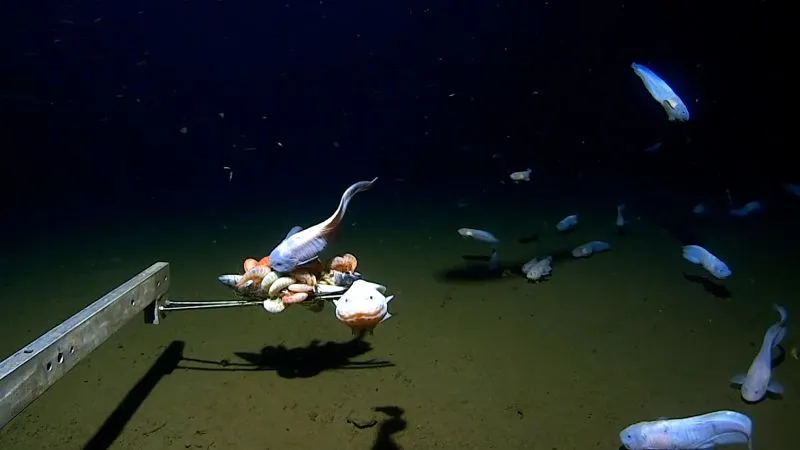
A recent scientific expedition exploring the dark, high-pressure environments of the deep ocean trenches off the coast of Japan has achieved a major breakthrough. Using advanced remote technology, researchers successfully captured high-definition footage of an unknown snailfish species thriving in extreme conditions. This remarkable creature was observed living at depths exceeding 27,000 feet below the ocean surface. Such a discovery provides invaluable insights into how life adapts to the crushing pressures and freezing temperatures of the Hadal zone, offering a rare glimpse into a previously unseen ecosystem.
Where was the deepest snailfish species discovered?
The unknown snailfish species was filmed at a depth of more than 27,000 feet within the deep ocean trenches located off the coast of Japan. This specific location belongs to the hadal zone, the deepest region of the ocean, characterized by extreme hydrostatic pressure and near-freezing temperatures. The expedition aimed to document the biological diversity present in these isolated underwater canyons.
The trenches near Japan are among the most significant geological features in the Pacific Ocean. Because these areas are so remote and difficult to access, they remain one of the least explored frontiers on Earth. The ability to capture high-definition footage at such depths provides researchers with rare evidence of how life adapts to environments that would be instantly fatal to most other organisms. These trenches act as massive, dark corridors that isolate biological communities, potentially leading to the evolution of unique species found nowhere else on the planet.
The depth of 27,000 feet places this discovery in a realm where the physical environment is defined by its hostility. Scientists studying these trenches are looking for more than just single sightings; they are seeking to map the complex ecosystems that persist in total darkness. The Japanese trenches provide a unique laboratory for this purpose, as their specific geological structure creates a series of isolated pockets where life must evolve in extreme solitude.
What makes the snailfish unique in the deep sea?
Snailfish are notable for their ability to thrive in high-pressure environments that would crush most vertebrate life. While many deep-sea creatures rely on specialized shells or skeletal structures, snailfish have evolved biological adaptations that allow them to maintain physiological functions under immense weight from the water column above. Their bodies are often soft and gelatinous, which helps them manage the crushing pressures of the hadal zone.
The discovery of this unknown species highlights the specialized niche that snailfish occupy. Unlike many other deep-sea predators that might rely on speed or heavy armor, the snailfish appears to have mastered a more subtle approach to survival in the extreme depths. This resilience allows them to exist in a realm where food is scarce and the physical environment is punishingly harsh.
This particular snailfish species represents a breakthrough in understanding the limits of vertebrate biology. By observing how this unknown species moves and interacts at such extreme depths, researchers can begin to piece together the evolutionary history of the snailfish family. The fact that a species remains unknown at such a significant depth suggests that our current understanding of deep-sea biodiversity is only the beginning of what is actually present in the ocean's trenches.
Biological adaptations to extreme pressure
To survive at depths exceeding 27,000 feet, these fish must possess cellular-level adaptations. According to CNN, the discovery of this unknown species via camera footage provides a direct look at how these organisms navigate the dark, high-pressure trenches. Scientists believe their bodies may contain specific proteins and unsaturated fats that prevent cell membranes from becoming too rigid under pressure. Without these molecular adjustments, the intense weight of the ocean would cause their cellular structures to fail.
The presence of an unknown species at this depth suggests that the evolutionary toolkit of the snailfish is even more diverse than previously understood. Researchers are looking to understand how these biological mechanisms function in real-time, as the footage provides a window into a world that is otherwise completely inaccessible to human senses. The study of these adaptations could eventually offer insights into the fundamental limits of vertebrate life.
The physiological challenges of the hadal zone extend beyond just pressure. At 27,000 feet, the temperature is near freezing, and the lack of sunlight means there is no photosynthesis to drive the food chain. This means the snailfish must also be adapted to a low-energy lifestyle, finding ways to conserve metabolic resources while navigating a landscape of extreme cold and darkness. Every aspect of their biology—from their skin texture to their internal chemistry—must be finely tuned to this specific, punishing environment.
How do scientists capture footage at such extreme depths?
Capturing video of a snailfish at 27,000 feet requires highly specialized deep-sea technology and remotely operated vehicles (ROVs). These machines must be built to withstand the crushing force of the hadal zone while carrying sensitive optical equipment and lighting systems to illuminate the pitch-black environment. The engineering required to prevent the cameras and electronics from imploding under the weight of miles of water is a significant hurdle for deep-sea expeditions.
The expedition utilized advanced camera systems to record the unknown species in its natural habitat. This method is preferred over physical collection because it allows scientists to observe the animal's behavior, movement, and interactions within its ecosystem without the immediate trauma of being brought to the surface. Bringing deep-sea creatures to the surface often results in rapid physiological changes due to the sudden decrease in pressure, which can destroy the very biological data researchers seek to study. By using remote cameras, the research team can maintain the integrity of the environment and the specimen.
Beyond the cameras themselves, the deployment of these vehicles involves complex logistics. Navigating a robotic vehicle through the jagged, uneven terrain of an ocean trench requires precision and real-time data processing. The lighting used must be powerful enough to penetrate the darkness but carefully controlled to avoid scaring away the very creatures the scientists are trying to document. This delicate balance between visibility and non-interference is essential for obtaining authentic footage of deep-sea life.
What is the significance of this deep-sea expedition?
The expedition serves as a critical step in mapping the biological diversity of the world's deepest trenches. Each discovery of a new or unknown species helps scientists understand the limits of life on Earth and the evolutionary pathways that allow organisms to occupy such extreme niches. The findings from the Japanese trenches contribute to a broader global understanding of how deep-sea ecosystems are structured and how they function.
By documenting the snailfish in the trenches off Japan, the research team adds to a growing body of knowledge regarding the hadal zone. These findings have implications not only for marine biology but also for our understanding of how life might exist on other planetary bodies with similar high-pressure oceans, such as certain moons in our solar system. The resilience shown by this snailfish species provides a biological blueprint for how life might survive in the most extreme environments imaginable.
Furthermore, this expedition highlights the importance of continued investment in deep-sea exploration technology. As we uncover more about the species inhabiting these trenches, the scientific community is faced with new questions regarding the connectivity of deep-sea habitats and how these isolated populations interact over geological timescales. The discovery of this unknown snailfish is not just a single event, but a catalyst for future research into the most remote corners of our planet.
FAQ: Deepest snailfish species
Where was the snailfish filmed?
The snailfish was filmed in the ocean trenches located off the coast of Japan. The footage was captured at a depth of more than 27,000 feet, placing the discovery within the extreme hadal zone of the ocean.
What is the depth of the discovery?
The discovery occurred at a depth exceeding 27,000 feet. At this level, the water pressure is significantly higher than at the surface, creating one of the most challenging environments for life and scientific exploration.
Is this a known species of fish?
The snailfish captured during this expedition is described as an unknown species. The footage provides researchers with the first visual evidence of this specific type of fish inhabiting these particular Japanese trenches.
Why is it difficult to study these fish?
Studying these fish is difficult due to the extreme depth and pressure of the trenches. Researchers must use specialized, highly durable technology like ROVs to reach these depths and record data without damaging the specimens.
What does this discovery tell us about life?
This discovery demonstrates that complex vertebrate life can exist in extreme environments. It provides insight into the biological adaptations required to survive the immense pressure and darkness of the deep-sea hadal zone.
Key takeaways
- Scientists filmed an unknown snailfish species at depths greater than 27,000 feet.
- The expedition took place in the deep ocean trenches located off Japan.
- The discovery occurred within the hadal zone, the ocean's deepest region.
- The footage was captured using specialized deep-sea technology to observe natural behavior.
The future of deep-ocean exploration
The sighting of the snailfish at such extreme depths underscores how much of the ocean remains a mystery. As technology for deep-sea imaging and robotic exploration continues to advance, the frequency of such discoveries is expected to increase. Each new species identified in the trenches off Japan provides a vital piece of the puzzle in understanding the global marine ecosystem and the incredible resilience of life in the most extreme corners of our planet.