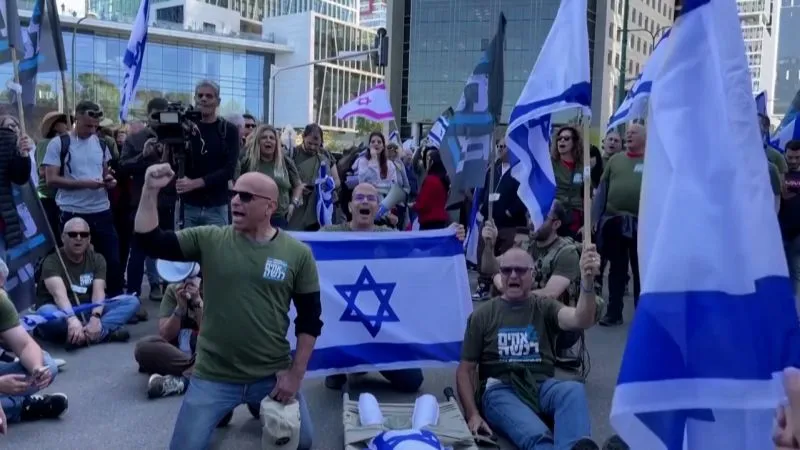
Former service members are emerging as a driving force in demonstrations against the government's proposed judicial overhaul, framing the issue as a matter of national survival. These individuals argue that the changes threaten the very foundations of the state they once swore to protect. By mobilizing their networks, they have transformed the nature of the movement, shifting the focus from political disagreement to a fundamental defense of democratic institutions. This involvement adds a unique layer of moral authority to the ongoing street demonstrations across the country.
Why are Israeli military veterans participating in the protests?
Israeli military veterans are participating in the protests because they view the proposed judicial overhaul as a fundamental threat to the democratic foundations of the state. For many former service members, the ability of the judiciary to act as a check on executive power is essential to the long-term stability and security of Israel. They argue that shifting power away from the courts could undermine the rule of law, which they believe is a prerequisite for a functioning and secure society.
The motivations of these veterans often stem from a deep-seated belief in the institutional integrity of the nation. By taking to the streets, they aim to signal to the government that the changes being proposed are not merely political adjustments but are perceived as existential risks to the democratic system they once defended. The core of their concern lies in the potential for an unchecked executive branch to erode the separation of powers that has historically defined the Israeli state.
This sense of duty is not merely theoretical; for those who have served, the stability of the state's institutions is directly linked to the stability of the state itself. They argue that the judicial system provides a necessary framework for resolving disputes and maintaining social order, and that removing these guardrails could lead to a governance model that lacks accountability.
What is the impact of veteran involvement on the protest movement?
The involvement of veterans provides a unique level of legitimacy and social capital to the protest movement. Because military service is a deeply respected institution in Israeli society, the presence of veterans on the front lines of demonstrations shifts the narrative from a purely political disagreement to a broader debate about national identity and institutional survival.
This demographic's participation can influence public perception in several ways:
- Increased credibility: Their status as former defenders of the state makes their warnings about democratic erosion harder for the government to dismiss as partisan rhetoric.
- Organizational strength: Veterans often bring disciplined approaches to mobilization and civil disobedience, which can enhance the coordination of large-scale demonstrations.
- Broadening the coalition: Their presence helps bridge the gap between different socio-economic groups, uniting diverse citizens under a shared concern for the country's future and its core values.
By leveraging their social standing, veterans act as a moral compass for the movement, suggesting that the fight for judicial independence is a patriotic duty rather than a partisan endeavor. This involvement complicates the government's ability to characterize the protesters as fringe elements, as the veterans represent a core pillar of the Israeli social contract.
How does the judicial overhaul debate affect national security?
The debate over judicial reform has become inextricably linked to concerns regarding Israel's national security. Protesters, including many in the military community, argue that a weakened judiciary could lead to internal instability, which in turn could weaken the country's ability to respond to external threats. This perspective posits that domestic cohesion is a pillar of national defense.
The core of this argument rests on the idea that a stable democracy is a more resilient state. If the internal mechanisms of checks and balances are compromised, the resulting social fragmentation and potential for political volatility could distract from and undermine the military's operational effectiveness and the nation's overall strategic posture. For veterans, the risk is that a fractured society becomes a vulnerable society, making the nation less capable of maintaining its security in a complex regional environment.
Furthermore, the concern extends to the potential for internal friction within the security establishment itself. If the civilian leadership is seen as undermining the democratic values that the military is sworn to protect, it could create deep-seated tensions between the defense forces and the political leadership, potentially affecting morale and the unity of command required during times of crisis.
What are the long-term implications of these demonstrations?
The sustained nature of the protests suggests that the tension between the government's reform agenda and the opposition's defense of the judiciary is unlikely to be resolved quickly. The commitment of veterans to keep demonstrating indicates that the movement is prepared for a prolonged period of civil unrest. This persistence highlights a deep ideological divide that transcends typical political cycles.
The outcome of this standoff will likely shape the future of Israeli governance and the relationship between the civilian population and its security institutions. Whether the government proceeds with the overhaul or seeks a compromise, the social divisions highlighted by these protests may persist for years, affecting the country's political landscape and social cohesion. The involvement of the military community adds a layer of complexity to this future, as the relationship between the defense establishment and the political leadership undergoes significant stress.
As these demonstrations continue, the central question remains whether the Israeli political system can find a way to integrate these fundamental concerns about democratic integrity into a new legislative framework, or if the divide will continue to widen, potentially leading to a permanent shift in the nation's social and political fabric.
FAQ: Israeli military veterans protests
Why are veterans protesting in Israel?
Veterans are protesting because they believe the proposed judicial overhaul threatens the democratic checks and balances essential to Israel's stability. They view the reduction of judicial power as a risk to the rule of law and the nation's long-term security and democratic integrity.
Does veteran participation change the protest's perception?
Yes, veteran participation lends significant legitimacy to the movement. Because military service is highly valued in Israel, their involvement frames the protests as a defense of national democratic values rather than just a political dispute, making the movement more difficult for the government to ignore.
What is the main goal of the judicial overhaul opposition?
The primary goal of the opposition is to prevent the government from implementing legislative changes that would limit the Supreme Court's ability to review government actions. They seek to maintain the current system of checks and balances to protect democratic institutions.
How does this impact Israel's security?
Protesters argue that the overhaul could lead to domestic instability and social fragmentation. They contend that a weakened democratic structure could undermine the country's overall resilience and its ability to effectively manage external security challenges.
Will the protests continue in the near future?
The protests are expected to continue as veterans and other groups have vowed to maintain their demonstrations. The deep ideological divide regarding the judicial reforms suggests that the movement will remain active until significant concessions or changes are made.
Key takeaways
- Veterans view the judicial overhaul as a threat to Israel's democratic foundations and national stability.
- Military service status provides the protest movement with increased social legitimacy and credibility.
- The debate links judicial independence directly to the country's long-term national security interests.
- The commitment of veterans signals a potential for prolonged civil disobedience and social tension.
Conclusion
The participation of Israeli military veterans in the protests against judicial reform marks a significant escalation in the country's domestic political struggle. By framing the debate around the preservation of democratic institutions and national security, these veterans have elevated the movement's profile and legitimacy. As the government continues to push its legislative agenda, the opposition remains resolute, suggesting that the confrontation over the future of Israel's judiciary and its democratic character will remain a defining feature of the nation's political landscape for the foreseeable future.