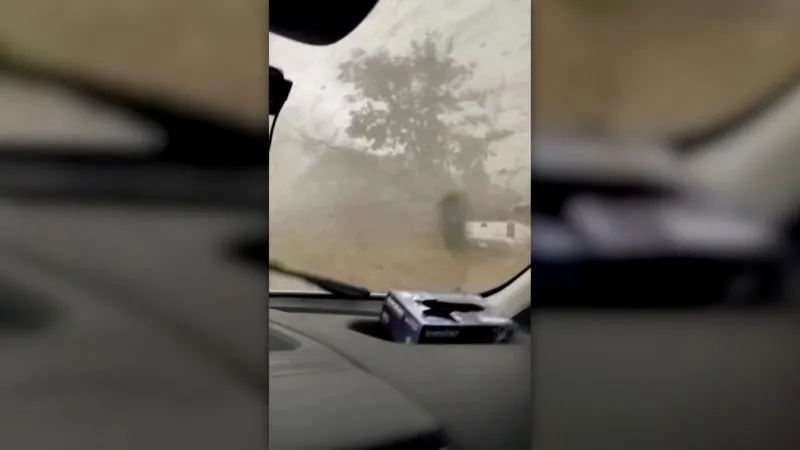
Cody Coombes recounts the terrifying experience of being caught in the path of a powerful EF-3 tornado while operating his professional vehicle in Little Rock. As the winds intensified, the pest control van became his only shelter against the debris. He describes the deafening roar and the sheer chaos of the storm as it tore through the surrounding landscape. This harrowing survival story highlights the unpredictable nature of extreme weather events in the region and the narrow margin between safety and disaster during such intense atmospheric disturbances.
What were the meteorological details of the Arkansas tornado?
The tornado that struck the Little Rock area was classified as an EF-3 on the Enhanced Fujita scale, a designation that indicates significant damage potential and high-intensity winds. According to data provided by the National Weather Service, the storm was not merely a passing weather event but a violent meteorological phenomenon that reached estimated peak wind speeds of 165 mph during its passage through the region.
The path of the tornado primarily affected two major counties in the state: Pulaski County and Lonoke County. The sheer velocity of the winds created a corridor of destruction that moved across these residential and commercial areas, leaving a trail of debris and structural failures in its wake. The intensity of an EF-3 storm represents a critical threshold where the risk to human life and property becomes extreme. At this level, the winds are capable of destroying well-constructed homes and lifting heavy objects from the ground, necessitating immediate and decisive emergency responses from local authorities.
Wind speeds and scale impact
At 165 mph, the winds associated with this EF-3 tornado fall into a category of severe weather that can cause catastrophic damage to infrastructure. Such winds are sufficient to strip roofs from buildings, uproot trees, and turn common objects into dangerous projectiles. The National Weather Service's classification serves as a vital tool for emergency management teams, helping them understand the level of devastation to expect and the specific resources required for long-term recovery efforts.
The impact of these wind speeds is felt most acutely in the structural integrity of buildings. While an EF-3 rating is a specific measurement of damage, the human experience of 165 mph winds involves a chaotic environment of flying debris and extreme atmospheric pressure. The speed of the wind ensures that the window for seeking shelter is incredibly narrow, as the transition from severe weather to a direct tornado strike can happen with devastating rapidity.
How many fatalities were reported in the storm?
The tornado resulted in a total of five confirmed fatalities across the affected Arkansas counties, marking the event as a significant tragedy for the local community. The loss of life was concentrated in two specific locations: North Little Rock and Wynne. According to official reports following the event, one individual died in North Little Rock, while the remaining four victims were located in Wynne, situated within Lonoke County.
The distribution of these fatalities highlights the unpredictable and lethal nature of the storm's path. While some areas experienced severe structural damage that may have been survivable, others faced the direct, life-threatening impact of the vortex. The loss of life in Wynne, in particular, underscores the vulnerability of communities caught in the direct trajectory of high-intensity tornadoes. Emergency services and local authorities worked to manage the immediate aftermath, focusing on search and rescue operations in the most heavily impacted zones to account for all residents in the path of the storm.
What is the story of Cody Coombes' survival?
Cody Coombes provided a firsthand account of the terror experienced during the storm while he was inside his professional vehicle. Coombes, who was operating a pest control van at the time, found himself directly in the path of the tornado. His experience serves as a visceral reminder of how quickly severe weather can escalate into a life-threatening situation for those caught outdoors or in transit.
The footage and testimony regarding Coombes' experience illustrate the chaotic environment inside a vehicle during a tornado strike. While the van provided a degree of enclosure, the intensity of the EF-3 winds created a harrowing environment that tested the limits of the vehicle's stability. His ability to ride out the storm inside the vehicle is a notable survival instance, though it highlights the extreme risks taken by workers who must remain mobile during severe weather windows. The account remains a powerful testament to the unpredictability of such natural disasters.
The risks of being in a vehicle
Being inside a vehicle during a tornado is widely considered extremely dangerous by meteorologists and emergency management agencies. While a heavy van may offer more protection and weight than a smaller passenger car, it remains highly susceptible to being overturned by high-velocity winds or struck by heavy flying debris. Coombes' survival is an exception to the general rule that motorists should seek sturdy, permanent shelter immediately when a tornado warning is issued.
The danger of being in a vehicle is compounded by the fact that vehicles can be easily tossed or rolled by the intense pressure gradients of an EF-3 tornado. In many cases, the vehicle becomes a trap rather than a shield. The survival of Coombes provides a unique perspective on the chaos, but experts continue to warn that relying on a vehicle for protection during a direct hit is a high-stakes gamble with human life.
What was the geographical impact on Pulaski and Lonoke counties?
The tornado's trajectory caused widespread damage across both Pulaski and Lonoke counties, impacting diverse community structures and residential zones. Pulaski County, which includes the North Little Rock area, saw significant destruction, including the loss of life mentioned in official reports. Lonoke County, particularly the town of Wynne, faced a heavy toll with four fatalities recorded there.
The geographical spread of the damage suggests a significant width to the tornado's path or a long duration of contact with the ground as it moved through these regions. In these counties, the impact ranged from residential property damage to the disruption of local commerce and essential infrastructure. The recovery process for these two counties involves not only repairing physical structures but also addressing the profound psychological impact on residents who witnessed the storm's power firsthand and lost neighbors or family members in the process.
FAQ: Little Rock tornado 2023
What was the intensity of the tornado?
The tornado was classified as an EF-3 by the National Weather Service. This classification means it had estimated peak wind speeds of approximately 165 mph, which is capable of causing severe structural damage to buildings and significant destruction to the landscape.
How many people died in the Arkansas tornado?
A total of five people lost their lives due to the tornado. According to official reports, one person died in North Little Rock, and four people died in the town of Wynne, located in Lonoke County.
Which counties were most affected?
The primary areas of impact were Pulaski County and Lonoke County in Arkansas. The storm moved through these regions, causing significant damage and fatalities in locations such as North Little Rock and Wynne.
Who is the individual who survived in a van?
Cody Coombes is the man who recounted the experience of riding out the tornado inside his pest control van. His account provides a unique perspective on the immediate experience of being caught in the storm's path.
What was the peak wind speed recorded?
The National Weather Service reported that the tornado reached estimated peak wind speeds of 165 mph. These high-velocity winds are characteristic of an EF-3 rated tornado and contribute to its high level of destructiveness.
Key takeaways
- The 2023 Arkansas tornado was rated an EF-3 with 165 mph winds.
- Five fatalities were confirmed: one in North Little Rock and four in Wynne.
- The storm's path heavily impacted Pulaski and Lonoke counties.
- Cody Coombes survived the event while inside a pest control van.
Conclusion
The 2023 Little Rock tornado stands as a devastating meteorological event for the state of Arkansas. The EF-3 classification and 165 mph wind speeds underscore the immense power of the storm, which claimed five lives across North Little Rock and Wynne. While individual stories like that of Cody Coombes highlight the possibility of survival in extreme circumstances, the overall impact on Pulaski and Lonoke counties remains a significant tragedy. The event serves as a critical reminder of the necessity for robust early warning systems and the importance of seeking proper, permanent shelter during severe weather outbreaks.