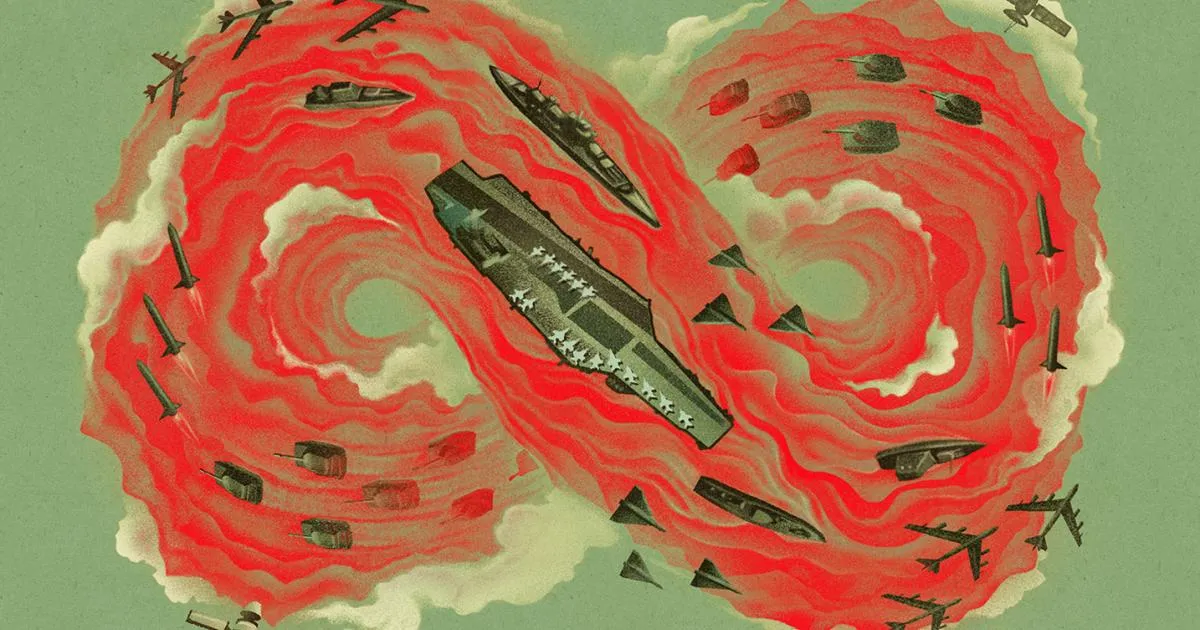
The myth of military victory is the dangerous belief that decisive battlefield success can secure political objectives without the need for diplomatic compromise. This concept suggests that a prostrate enemy will accept terms on the victor's timetable, yet history proves that combat alone rarely achieves this. All modern wars conclude through negotiated settlements, as both sides must eventually choose to stop fighting. This article examines why the pursuit of total military annihilation is a fallacy, analyzing historical precedents from the Gulf War to World War II to show how bargaining remains the essential mechanism of conflict resolution.
Why is the idea of a decisive military victory so seductive?
The concept of military victory is attractive because it promises a high-reward outcome at a manageable cost. Policymakers often envision a short, violent campaign that leaves an enemy so broken they have no choice but to surrender on the victor's terms. This vision bypasses the messy, slow, and often frustrating process of diplomatic negotiation, which requires compromise and can be stalled by opponents to exhaust political will.
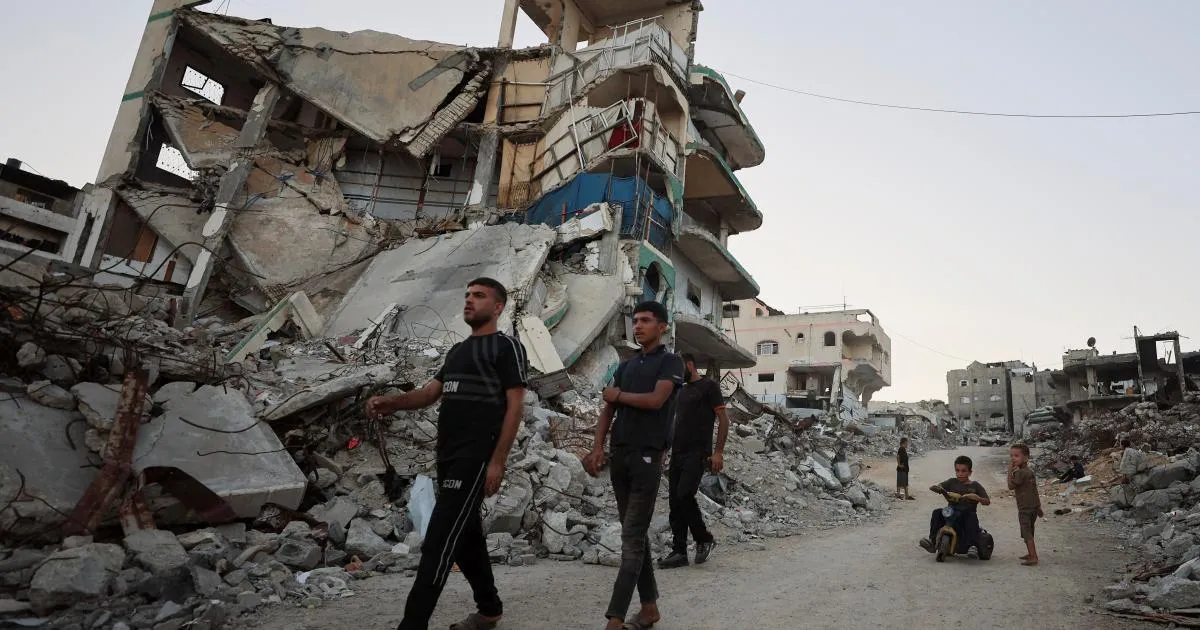
In recent years, this allure has driven several high-stakes conflicts. The Trump administration in early 2026 operated under the assumption that force could compel Iran into unconditional surrender, yet it faced a stalemate. Similarly, the Netanyahu government in Israel sought a total military defeat of Hamas in Gaza, a goal that has arguably prolonged the conflict. Even in Ukraine, the expectation that battlefield dominance would resolve the war has led to a protracted struggle with no clear endgame. These examples illustrate how the desire for a clean, combat-driven win can blind leaders to the realities of modern warfare.
How do modern wars actually end?
All modern wars end through negotiated settlements rather than the total destruction of an enemy's ability to resist. While combat is the defining feature that distinguishes war from peacetime politics, its primary function is to shape the bargaining leverage of the participants, not to annihilate them. To end a conflict, both sides must reach a point where they decide that continuing to fight is more costly than accepting a deal.
These settlements generally fall into two categories: explicit and tacit.
- Explicit negotiations: These involve direct communication, formal offers, and counteroffers. Notable examples include the 1995 Dayton Accords that ended the Bosnian War and the armistice of the Korean War.
- Tacit bargaining: This occurs when sides use actions, threats, or declarations to signal their acceptance or rejection of terms without formal dialogue. The 1990–91 Gulf War is a prime example; the U.S.-led coalition announced a unilateral ceasefire, and the Iraqi forces stopped fighting because they understood that continued resistance would lead to the fall of Baghdad.
Even in the Gulf War, which is often cited as a model of decisive victory, the Iraqi military was not destroyed. At the time of the ceasefire, the Iraqi army retained most of its strength, with fewer than 15 percent of its million-man force killed or wounded. The victory was achieved by shifting the enemy's expectations, not by eliminating their capacity to exist.
The distinction between destruction and bargaining
It is a mistake to equate military destruction with political success. Destruction serves to increase the pressure on an opponent to negotiate, but it does not remove the fundamental need for a bargain. If a state's capacity to resist remains, even in an irregular or insurgent capacity, the war is not over until a settlement is reached. This was evident in the 2003 invasion of Iraq; while the uniformed military disintegrated quickly, the subsequent insurgency lasted years because the underlying political tensions were never resolved through a lasting settlement.
Why is total annihilation almost impossible in modern warfare?
Since the end of the Napoleonic Wars in 1815, the capacity of defeated nations to resist has remained remarkably high. Historical data shows that in interstate wars, defeated parties have lost a median of only eight percent of their forces. In two-thirds of such conflicts, the loss was even lower than ten percent. The only significant outlier in modern history was Paraguay during the Triple Alliance War (1864–70), which lost over 90 percent of its forces.
Because most belligerents accept unfavorable terms long before they are physically incapable of fighting, the concept of "disarming" an enemy is largely a myth. Even when a capital falls or a military is swept from the field, combatants can transition to irregular warfare. This was seen in Afghanistan, where the Taliban were driven from Kabul and their military structures dismantled by 2002. However, because they were not offered a political settlement that included them, they continued to fight as insurgents, eventually recapturing the capital in 2021.
Does World War II prove that total victory is possible?
The Allied conquest of Nazi Germany and imperial Japan is frequently used as the ultimate evidence for the possibility of total military victory, but this is a historical misinterpretation. While the war ended with the total defeat of the Axis powers, it was still a product of bargaining, not the total annihilation of the enemy's capacity to fight.
In the case of Imperial Japan, the nation possessed nearly eight million troops during the war. By the time of the surrender in August 1945, fewer than two million had died in combat. This meant that over six million armed and equipped Japanese soldiers remained in the field. The Japanese did not surrender because they were physically unable to fight; they surrendered because the Allies had successfully shifted the cost-benefit analysis of continued resistance.
The role of concessions in surrender
The surrender of Japan demonstrates that even "unconditional" surrenders involve significant concessions. While the Allies initially demanded unconditional surrender, the final terms offered in the Potsdam Declaration provided much-needed clarity and relief. Japan was allowed to retain sovereignty over its main islands, its military personnel were permitted to return home without internment, and the country was allowed to keep its industrial base. These were not the terms of a destroyed people, but the terms of a negotiated settlement between a victor and a survivor.
The Japanese leadership used the threat of continued resistance—specifically the prospect of massive Allied casualties during a potential invasion—as leverage to secure these more tolerable terms. This confirms the central thesis: even in the most lopsided victories, the end of the war is a result of a bargain shaped by the relative costs of continued fighting versus the terms of peace.
What are the risks of believing in the military victory myth?
Relying on the myth of military victory creates systemic failures in how nations prepare for and engage in conflict. When policymakers assume that combat will automatically produce the desired political outcome, they make critical errors in intelligence, force design, and modernization. They design militaries to win battles, but they fail to design strategies that integrate campaign planning with negotiating objectives.
The consequences of this muddled thinking include:
- Prolonged conflicts: Pursuing an unattainable goal of total defeat (as seen in Gaza or Ukraine) can lead to wars of attrition with no clear exit strategy.
- Strategic exhaustion: Nations may find themselves embroiled in conflicts that are easy to initiate but impossible to end through force alone, potentially leading to domestic and economic exhaustion.
- Intelligence failures: Overestimating the ability of force to compel surrender leads to poor assessments of enemy resolve and political willpower.
As long as leaders view negotiation as a sign of weakness or a "second-best" option, they will remain vulnerable to the trap of seeking a military solution to inherently political problems.
FAQ: Understanding the Myth of Military Victory
Can a war end without any negotiation?
While some wars end through tacit bargaining—where one side stops fighting due to perceived costs—they are still essentially bargains. Even without formal meetings, the cessation of hostilities relies on both sides accepting the implicit terms of the situation, such as the 1991 Gulf War ceasefire.
Is the destruction of an enemy's army enough to win a war?
No, destroying an army is not sufficient to end a war. As seen in Afghanistan and Iraq, even when a formal military is defeated, the conflict can continue through irregular warfare if the political grievances and the need for a negotiated settlement are not addressed.
What is the difference between military victory and political victory?
Military victory refers to success on the battlefield, often characterized by the defeat of an enemy's armed forces. Political victory is the achievement of the original goals for which the war was fought. A military victory does not guarantee a political victory if the enemy refuses to accept the resulting settlement.
Does "unconditional surrender" actually exist?
In practice, true unconditional surrender is rare. Even in World War II, the Allies provided specific conditions and concessions to Japan and Germany to facilitate the transition to peace. Most surrenders involve some level of bargaining to ensure the terms are tolerable enough for the defeated to stop fighting.
Why do leaders often pursue military victory instead of negotiation?
Leaders are drawn to military victory because it promises a decisive, high-reward outcome that avoids the compromises of diplomacy. Negotiation is often viewed as a sign of weakness or a way for an enemy to stall, making the idea of a battlefield win highly politically attractive.
Key takeaways
- Modern wars almost always conclude through negotiated settlements rather than total enemy annihilation.
- The primary role of combat is to increase bargaining leverage, not to destroy an opponent's capacity to resist.
- Total military destruction of an enemy is historically rare and rarely results in a clean political end.
- Pursuing an unattainable military victory can lead to prolonged conflicts and strategic exhaustion.
Conclusion
The pursuit of absolute military victory is a dangerous strategic error that misinterprets the nature of modern conflict. While battlefield effectiveness is essential for creating leverage, it is not a substitute for the diplomatic processes required to finalize a peace. History shows that even the most decisive campaigns, such as those in the Gulf War or World War II, were ultimately resolved through bargains. Recognizing that wars end only when both sides agree to stop fighting is crucial for policymakers seeking to avoid the pitfalls of protracted, unachievable, and exhausting wars of choice.