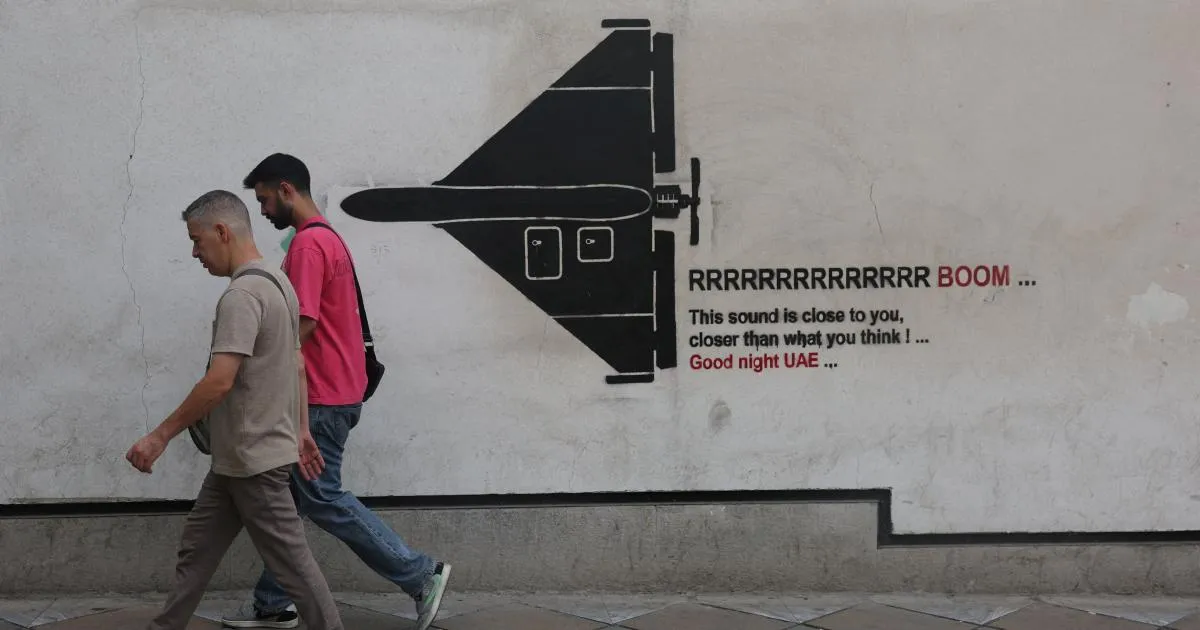
Precise mass in warfare involves deploying high-volume, low-cost, precision-guided weapons to overwhelm traditional defenses. During recent conflicts, Iran utilized an arsenal of inexpensive drones and missiles to maintain regime stability despite intense US and Israeli strikes. While American forces destroyed over 13,000 targets, including key leadership, Tehran's ability to launch effective counter-strikes and threaten the Strait of Hormuz demonstrated that cheaper munitions can offset expensive, high-end military technology. This article examines the shift toward asymmetric precision, the economic imbalance between offense and defense, and the global race to adopt these disruptive systems.
How did Iran survive intensive US and Israeli strikes?
Iran maintained its political and military continuity through rigorous pre-war preparation and a decentralized infrastructure. Despite the loss of Supreme Leader Ali Khamenei, the Minister of Defense, and the head of the Islamic Revolutionary Guard Corps, the regime successfully replaced its leadership almost immediately. This resilience was bolstered by a long-standing strategy of building vast underground missile networks across the country, which proved nearly impossible for coalition forces to fully eliminate.
Beyond leadership continuity, Iran managed to mitigate the impact of a US naval blockade by securing sufficient imports to prevent total economic collapse. This combination of political readiness and physical dispersion allowed the state to remain an active combatant even after suffering significant damage to its primary military infrastructure.
The role of underground networks
The war inverted long-held American airpower assumptions. Since Operation Desert Storm in 1991, US strategy has often focused on destroying existing weapons stockpiles. However, Iran's heavily dispersed production facilities and deep underground storage meant that even after 13,000 targets were hit, the country's ability to produce and launch munitions remained intact.
What is the concept of precise mass in warfare?
Precise mass is a military paradigm defined by the use of massive quantities of relatively inexpensive, precision-guided weapons rather than a small number of extremely expensive, high-end platforms. This approach allows weaker states to match the capabilities of superpowers by overwhelming them through sheer volume. While the United States has historically relied on "exquisite" systems—such as F-35 fighters and Tomahawk missiles—to achieve dominance, the Iranian conflict proved that these systems can be neutralized by a barrage of cheap, accurate drones.
This shift creates a fundamental challenge for traditional militaries. Conventional forces are organized around the careful management of scarce, expensive assets. In contrast, the doctrine of precise mass encourages a mindset of rapid, disposable deployment, where the goal is to overwhelm the enemy's ability to respond rather than achieving a single, perfect strike.
Why is offense currently cheaper than defense?
The economic reality of modern combat is that the cost of attacking is significantly lower than the cost of defending. This imbalance stems from the massive price gap between incoming munitions and the interceptors required to stop them. For example, a single Shahed-136 attack drone might cost only $35,000, yet defending against it may require a Patriot missile costing upwards of $4 million.
This cost asymmetry forces even the most advanced militaries into a war of attrition they are ill-equipped to win. During the conflict, the United States was forced to deplete a significant portion of its high-end defensive inventories. According to the analysis, Washington used approximately 65% of its Patriot interceptors and 35% of its THAAD interceptors to counter Iranian salvos. This rapid depletion leaves major powers and their allies with dangerously low stockpiles, complicating their ability to support other global flashpoints.
The search for scalable defense
To address this gap, governments are exploring new defensive technologies. These include directed energy weapons (lasers) and high-power microwave systems designed to destroy drones more cost-effectively. There is also a move toward "near-miss" interceptors that explode near a target rather than requiring a direct hit. While some startups and Ukraine-based initiatives are producing interceptor drones for as little as $1,400, these solutions have yet to reach the scale necessary to counter a full-scale barrage of precise mass.
How is AI reshaping the speed of combat?
Artificial intelligence has become a critical component in modern warfare, primarily through decision-support platforms that accelerate the targeting process. The United States utilized systems like the Maven Smart System to aggregate intelligence and recommend targets with unprecedented speed. This capability allows military commanders to process vast amounts of data and execute strikes much faster than human analysts could alone.
However, this speed introduces significant risks, including automation bias and catastrophic errors. The reliance on AI-driven targeting can lead to instances where imperfect algorithms flag civilian targets, such as the incident where an Iranian school was mistakenly identified as a military objective, resulting in over 100 civilian deaths. Furthermore, the advantage provided by AI is not necessarily tied to the most advanced "frontier" models, but rather to superior data architecture and organizational integration. As open-source AI models become more capable, the technological gap between major powers and smaller actors is likely to narrow.
What is the global impact of this shift in military technology?
The effectiveness of Iran's strategy has triggered a global rush to invest in drone production and precise mass capabilities. Nations across various economic levels are recognizing that they can no longer rely solely on expensive, traditional platforms. This trend is visible in several key regions:
Asia: Japan has requested a record $55.6 billion defense budget, with a heavy focus on acquiring large quantities of attack drones.
Europe: Poland has dramatically increased its drone spending, rising from $27 million in late 2023 to roughly $6.9 billion this year. Additionally, six European states, including France and the UK, are co-developing long-range drones with costs under $100,000.
Middle East: Saudi Arabia has unveiled attack drones modeled on Iranian technology with ranges exceeding 900 miles.
Africa: A Nigerian company has contracted with a Turkish manufacturer to build 100,000 one-way attack drones via local assembly.
This widespread adoption suggests that the era of military dominance based on a few high-cost platforms is ending, replaced by an era where mass, volume, and cost-efficiency dictate the balance of power.
FAQ: Precise mass in warfare
What is the main advantage of precise mass?
The primary advantage is the ability of a less wealthy or less technologically advanced state to overwhelm a superior military through volume. By using large numbers of low-cost, accurate drones and missiles, a state can force an opponent to deplete their expensive, limited supply of interceptors.
Why are traditional air defenses struggling?
Traditional air defenses struggle because of the massive cost disparity between attackers and defenders. Using a multi-million dollar interceptor to destroy a $35,000 drone is economically unsustainable in a prolonged conflict, leading to the rapid depletion of high-end missile stockpiles like the Patriot system.
How does AI affect modern warfare?
AI accelerates the targeting process by providing rapid intelligence analysis and strike recommendations. While this increases the speed of operations, it also introduces risks of automation bias and errors, where humans may over-rely on imperfect algorithms, potentially leading to civilian casualties.
Is the US military losing its advantage?
The US maintains an advantage in "exquisite" technology and AI-driven decision support, but it is losing its advantage in terms of inventory sustainability. The high cost of US systems makes it difficult to compete in a war of attrition against mass-produced, inexpensive munitions.
What role do drones play in this new era?
Drones serve as the primary vehicle for precise mass. They are cheap, easy to mass-produce, and capable of carrying precision guidance, allowing even smaller nations to project significant offensive power and disrupt much more expensive naval or air assets.
Key takeaways
Precise mass utilizes high volumes of low-cost, accurate weapons to overwhelm expensive traditional defenses.
The cost of defense significantly exceeds the cost of offense, creating an economic imbalance in modern conflict.
Iran's ability to survive intense strikes was driven by decentralized infrastructure and rapid leadership replacement.
Global military spending is shifting toward mass-produced drones and cheaper, scalable defensive technologies.
The future of global military balance
The conflict in Iran has fundamentally altered the calculus of modern warfare. The era where a few high-end, "exquisite" platforms could guarantee dominance is being replaced by a reality where volume and cost-efficiency are paramount. As nations from Japan to Nigeria race to build drone capacities, the military balance is shifting toward those who can most effectively integrate precise mass into their doctrines. For major powers, the challenge is no longer just about technological superiority, but about the ability to scale production and adapt organizational structures to a new, more crowded, and more affordable battlefield.