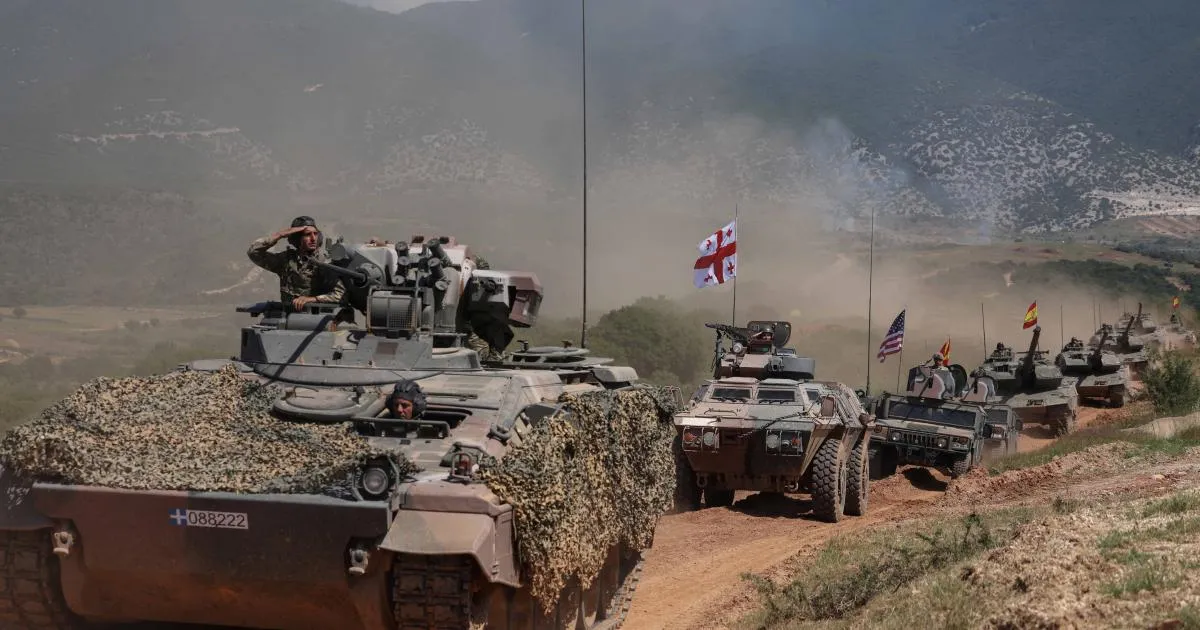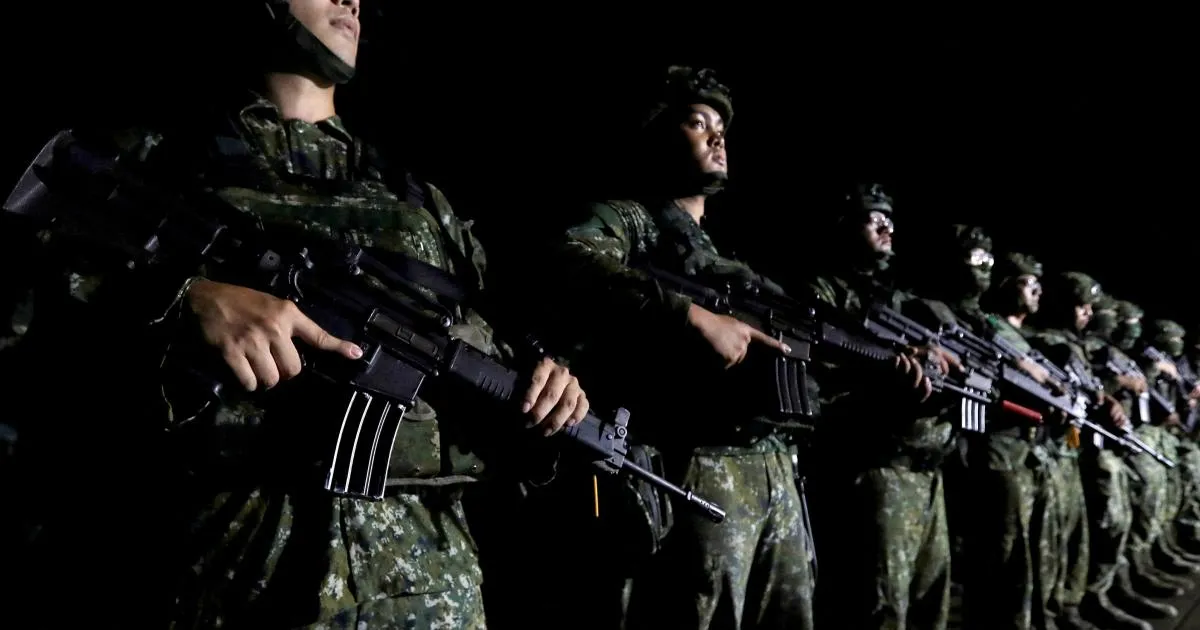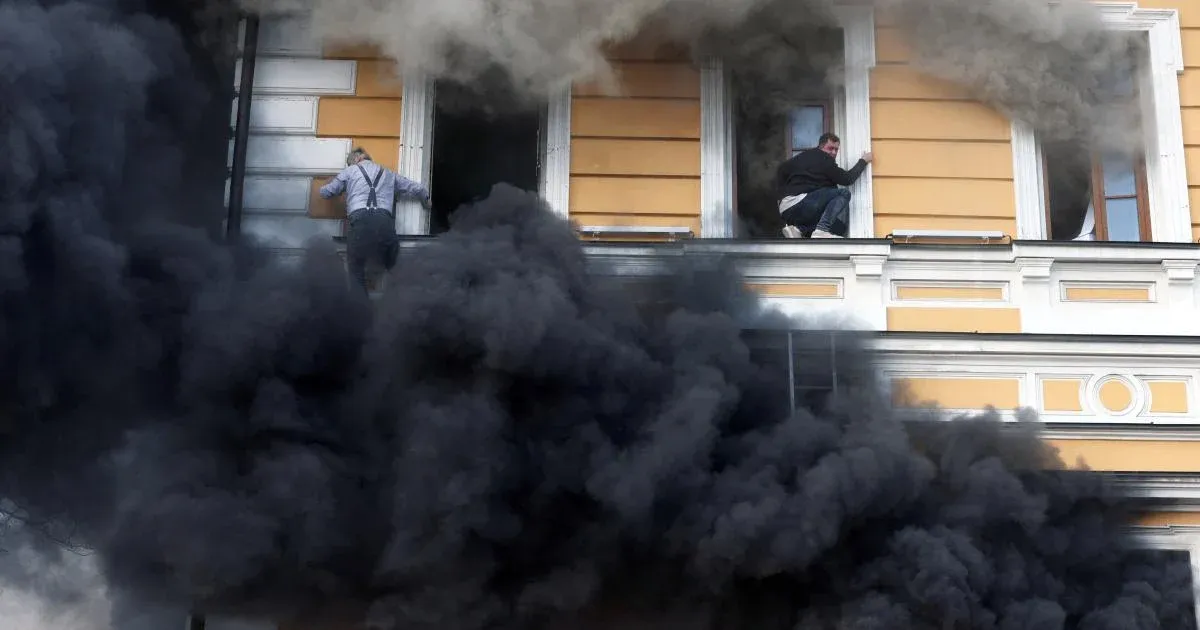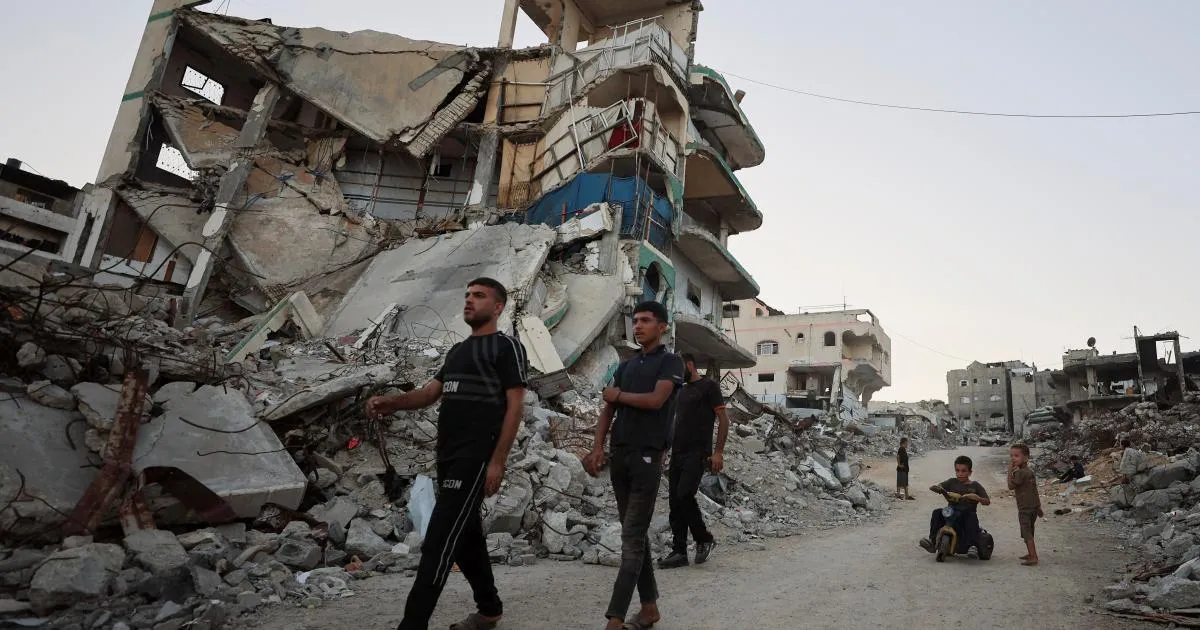
Russia's hybrid war has transitioned from subtle, deniable provocations to brazen, high-stakes incursions across European territory. According to Julianne Smith, former U.S. Permanent Representative to NATO, Russian incursions in Europe quadrupled during the first year of the war in Ukraine. These tactics—ranging from drone violations to arson and cyberattacks—aim to erode confidence in Article 5 and fracture alliance unity. This article examines the evolution of Moscow's 'active measures,' the structural limitations of NATO's response, and the increasing risk of catastrophic escalation.
How has Russia's hybrid warfare strategy evolved?
Russia's hybrid warfare has moved from the shadows of plausible deniability into a phase of increasingly overt aggression. For years, Moscow utilized 'active measures'—a Soviet-era concept involving proxies and irregular forces—to achieve political goals while maintaining enough distance to avoid a collective NATO response. However, since the 2022 invasion of Ukraine, the scale and nature of these operations have fundamentally shifted.
The strategy is no longer just about disinformation or minor airspace violations. It has become a diversified campaign of sabotage and direct interference. According to the Center for Strategic and International Studies, the frequency of Russian incursions in Europe quadrupled during the first year of the conflict in Ukraine. This escalation is characterized by two primary shifts: a massive increase in the tempo of attacks and a diversification of the methods used to destabilize the West.
The diversification of Moscow's toolkit
Modern Russian hybrid tactics now encompass a wide array of disruptive activities designed to target the very fabric of European stability. Beyond traditional cyberattacks and disinformation, Moscow-linked actors have engaged in physical sabotage. This includes the targeting of railway systems, the placement of incendiary devices in cargo shipments, and the recruitment of criminal networks within Europe to carry out arson attacks on critical military depots. Such tactics are specifically intended to slow the flow of Western assistance to Ukraine by making the logistics of support increasingly dangerous and costly.
What are the specific tactics used in recent hybrid attacks?
Recent incidents demonstrate that Russia is increasingly willing to risk direct confrontation to test the limits of NATO's resolve. The era of purely 'deniable' actions is ending as the physical evidence of Russian involvement becomes harder to ignore. These incidents often target critical infrastructure or involve direct violations of sovereign airspace by military hardware.
- Airspace Incursions: Frequent violations by drones and fighter jets have forced NATO members, such as Romania and Spain, to scramble jets to intercept Russian hardware.
- Infrastructure Sabotage: Attacks have targeted undersea fiber-optic cables, energy facilities, and transport hubs, including the discovery of explosive-laden drones at a German airport.
- Cyber Warfare: The use of 'wiper' malware designed to destroy data and disable operating systems has been deployed against energy sectors, such as in Poland.
- Physical Sabotage: Arson attacks on weapons factories and the use of criminal proxies to burn depots have become documented methods of disrupting military supply chains.
These actions are not random; they are coordinated efforts to probe the vulnerabilities of the alliance's eastern flank and create a sense of insecurity among European populations.
Why is NATO struggling to deter these provocations?
NATO's current difficulty in deterring Russia stems from a structural mismatch between the alliance's founding purpose and the nature of modern hybrid warfare. Established in 1949, NATO was designed to defend against attributable, conventional armed attacks. It lacks the built-in mechanisms to impose non-military costs on actors operating in the 'grey zone' between peace and war.
While the alliance has improved its detection and forensics, its response remains largely reactive. When an incident occurs, NATO often responds on a case-by-case basis, which Putin interprets as a lack of unified resolve. Because the alliance is a defensive military organization, it does not possess the authority to implement sanctions or expel diplomats; those powers reside with individual member states and the European Union. This fragmentation allows Moscow to exploit the differing political appetites and risk tolerances of the 32 member nations.
The consensus challenge in a multi-polar alliance
Achieving a collective response to hybrid threats requires total consensus, a high bar when dealing with unconventional provocations. Even if the alliance agrees that a cyberattack or a piece of sabotage warrants a response, the threshold for triggering Article 5 remains undefined. This ambiguity creates a vacuum that Russia is eager to fill. Furthermore, shifting political landscapes within member states—such as the focus on defense spending priorities in the United States—can divert the alliance's attention away from the urgent need for a cohesive hybrid warfare strategy.
What is the impact of political shifts on alliance unity?
Internal political dynamics within NATO member states have significantly slowed the momentum required to counter Russia's hybrid campaign. The need for consensus means that the domestic priorities of a single powerful member can stall the development of a unified strategy. For instance, during the transition of U.S. leadership in 2025, the alliance's focus shifted heavily toward defense spending targets rather than addressing the specificities of Russian hybrid aggression.
While the commitment by all allies to spend 5% of GDP on defense by 2035 is a significant achievement, it has come at the cost of strategic focus. The preoccupation with budget negotiations and internal bickering over economic stability has left a gap in the alliance's ability to formulate a dedicated Russia strategy. As a result, the 2025 NATO summit in The Hague failed to even mention Russia's hybrid war in its official declarations, signaling a dangerous lapse in strategic vigilance.
How does Russia's escalation increase the risk of conflict?
The transition from deniable provocations to brazen incursions significantly raises the probability of a miscalculation that could lead to large-scale conflict. As Russia moves closer to the threshold of conventional warfare, the margin for error decreases. Each drone shot down or missile intercepted brings the alliance closer to a situation where a single incident could result in catastrophic loss of life.
The 'frog in a pot' analogy applies here: the gradual escalation of hybrid attacks makes the eventual jump to conventional conflict feel less sudden, yet the danger intensifies with every step. When Russian drones strike residential buildings or submarines test weapons near critical undersea infrastructure, the risk of an accidental escalation is no longer theoretical. Without a mechanism to impose meaningful, predictable costs on Moscow for these 'grey zone' activities, the alliance remains in a cycle of reacting to crises rather than preventing them.
FAQ: Russia's Hybrid War
What is the difference between conventional and hybrid warfare?
Conventional warfare involves direct, attributable military force between states, such as tank battles or missile strikes. Hybrid warfare uses a mix of non-military tools—including cyberattacks, disinformation, economic pressure, and deniable sabotage—to achieve political goals while staying below the threshold that would trigger a full-scale military response from an alliance like NATO.
How does Article 5 apply to hybrid attacks?
Article 5 is the principle of collective defense, stating that an attack on one member is an attack on all. While NATO maintains that a hybrid or cyberattack could trigger Article 5, the alliance has not defined a specific threshold. This ambiguity makes it difficult to respond collectively to deniable provocations.
What are 'active measures'?
'Active measures' is a term derived from Soviet intelligence tradecraft. It refers to the use of political warfare, including the use of proxies, front groups, and disinformation, to influence events and erode an opponent's stability without engaging in direct, open military conflict.
Why is it difficult for NATO to sanction Russia?
NATO is a military alliance, not a political or economic union. It does not have the legal authority to impose economic sanctions or manage diplomatic expulsions. These responsibilities belong to individual sovereign nations and the European Union, which can lead to slower, less unified responses to Russian provocations.
What is the significance of the 2025 NATO summit?
The 2025 summit at The Hague saw allies commit to increasing defense spending to 5% of GDP by 2035. However, the summit was criticized for failing to address Russia's intensifying hybrid warfare, focusing instead on budget concerns and leaving a strategic gap in the alliance's defense posture.
Key takeaways
- Russia's hybrid attacks in Europe quadrupled during the first year of the war in Ukraine.
- Hybrid tactics now include physical sabotage, arson, and the use of criminal networks.
- NATO's defensive structure makes it difficult to impose non-military costs on Russia.
- The lack of a defined threshold for Article 5 creates ambiguity in responding to hybrid threats.
- Escalating incursions increase the risk of a catastrophic miscalculation between NATO and Russia.
Conclusion
The evolution of Russia's hybrid warfare represents a profound challenge to the stability of Europe and the cohesion of NATO. By operating in the grey zone, Moscow successfully exploits the structural limitations of a military alliance designed for a different era of conflict. As provocations move from subtle disinformation to direct sabotage and airspace violations, the risk of an accidental escalation into conventional war grows. To maintain deterrence, the alliance must move beyond reactive, incident-based responses and establish a unified framework capable of imposing meaningful costs on Russian aggression.