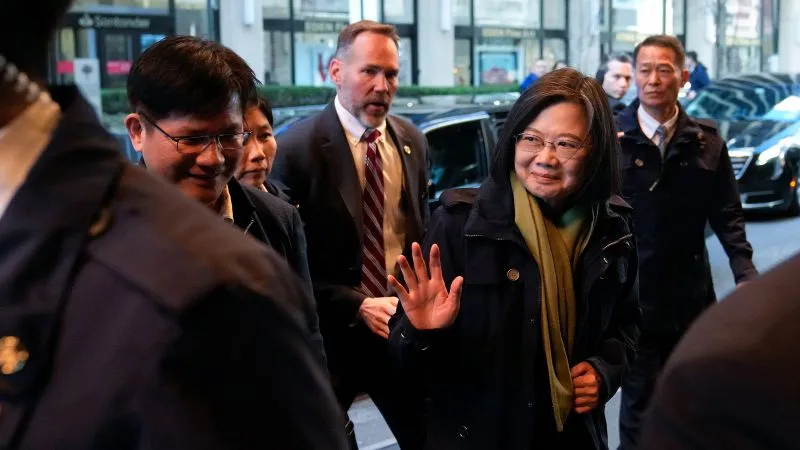
The scheduled meeting between Taiwan’s President Tsai Ing-wen and US House Speaker Kevin McCarthy serves as a major symbolic moment for the unofficial ties maintained between Washington and Taipei, amid heightened threats from Beijing. This high-stakes diplomatic encounter underscores the complex security architecture of the Indo-Pacific region. As tensions escalate, the visit highlights the delicate balance required to support democratic allies while managing the volatile geopolitical friction between the world's two largest economies. Furthermore, analysts suggest that such high-level interactions could trigger immediate military posturing from the People's Liberation Army in the Taiwan Strait.
Why is the meeting between Tsai Ing-wen and Kevin McCarthy significant?
The scheduled meeting between Taiwan’s President Tsai Ing-wen and US House Speaker Kevin McCarthy serves as a major symbolic moment for the unofficial ties maintained between Washington and Taipei. While the United States does not officially recognize Taiwan as a sovereign state under its "One China" policy, the presence of the second-highest-ranking official in the US House of Representatives underscores the deepening security and political cooperation between the two entities.
For President Tsai, who is entering the final year of her second term, the meeting is viewed by political analysts as a "capstone event." According to Wen-Ti Sung, a political scientist at the Australian National University’s Taiwan Studies Program, Tsai has cultivated an image of a leader who has elevated US-Taiwan relations to new heights and increased Taiwan's international visibility. This visibility is crucial as the island continues to face mounting pressure from the People's Republic of China, which claims the territory as its own despite never having controlled it.
Tsai has remained defiant in the face of this pressure. As she embarked on a 10-day trip that included a stopover in the US, she pledged that "external pressure" would not stop Taiwan from connecting with the world and other like-minded democracies. This meeting in California, rather than in Taipei, is seen by some analysts as a way to manage the optics of the encounter while still signaling a strong partnership.
The role of the US House of Representatives
The US Congress has become a consistent pillar of increasing American support for Taiwan in recent years. Lawmakers regularly visit the island and drive bipartisan legislation designed to enhance Taiwan's defensive capabilities and cooperation with the US. While the US maintains unofficial ties, it remains bound by law to provide the democratic island with the means to defend itself.
House Speaker Kevin McCarthy, as the leader of the Republican majority, occupies a significant position in the American political hierarchy, ranking second in line to the Presidency. Although McCarthy does not possess the same decades-long record of China advocacy as former Speaker Nancy Pelosi, he has emerged as a leading voice pushing for closer scrutiny of Beijing. Meeting with Tsai offers McCarthy an opportunity to burnish this image of a firm leader on China. Regarding his own future travels, McCarthy recently told reporters that meeting Tsai in the US would not impact whether he travels to Taiwan in the future, a trip he had previously expressed interest in making.
How might China respond to the meeting?
Beijing has already signaled its intent to respond forcefully, warning that it will "resolutely fight back" if the meeting proceeds. The Chinese government views such high-level interactions as violations of its sovereignty and has previously utilized intense military coercion to signal its displeasure. In 2022, following Nancy Pelosi's visit to Taipei—the first by a lawmaker of her rank in 25 years—China launched an unprecedented pressure campaign. This included firing multiple missiles into surrounding waters and sending dozens of warplanes across the sensitive median line dividing the Taiwan Strait.
Furthermore, Beijing retaliated by cutting off contact with the United States on several fronts, ranging from military matters to cooperation on combating climate change. This time, China has also slammed Washington for allowing Tsai to stopover in the US while en route to and from official visits in Central America, warning that such actions could lead to "serious" confrontation between the two powers.
However, analysts suggest that Beijing may exercise more caution this time. Yun Sun, director of the China Program at the Stimson Center, notes that China faces a unique dilemma: any excessive overreaction could further isolate Beijing from the international community. "This puts the burden on China not to overreact, because any overreaction is only going to push China further away from the world," Sun said. While China frequently reacts to actions it dislikes with military coercion, the current situation requires Beijing to carefully consider the potential consequences of an escalation.
The risk of military escalation
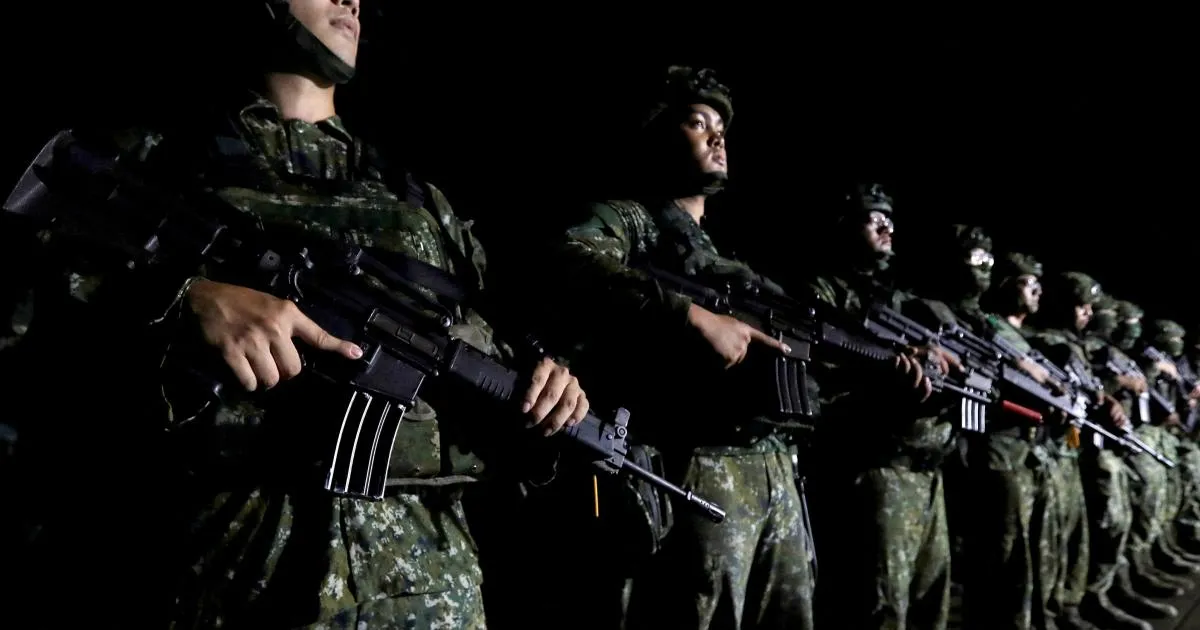
Despite the potential for restraint, the risk of military flexing remains high. Taiwan is still feeling the fallout from the August 2022 response to Pelosi's visit, with Chinese military forces now regularly making incursions over what had previously been an informal but largely respected border of control in the Taiwan Strait. The People's Liberation Army (PLA) has ramped up its pervasive military pressure, and there are ongoing concerns in Washington that Beijing is preparing for a potential invasion, even if China's official language suggests that force is not its preferred option for "reunification."
The opacity of China's political system adds a layer of uncertainty. The potential for competing interests within China's vast bureaucracy makes it difficult for outside observers to accurately predict how Beijing will calibrate its response. Analysts are left to wonder how much military might Beijing will choose to flex over a meeting between an American lawmaker and a Taiwanese leader occurring on American soil.
What is the impact on Taiwan's domestic politics?
The timing of the meeting is particularly sensitive due to Taiwan's upcoming presidential election in January. A heavy-handed response from Beijing could inadvertently influence the domestic political landscape by pushing voters toward the Kuomintang (KMT), the main opposition party. The KMT is widely seen as being more friendly toward Beijing, and a fierce external reaction could shift the electorate's stance.
This political tension is further complicated by the recent visit of former Taiwan president and senior KMT member Ma Ying-jeou to mainland China. This tour marks the first visit from a current or former Taiwan leader since the end of the Chinese Civil War in 1949. Political scientist Wen-Ti Sung described Ma's tour as a "once in a half a century opportunity" to send a conciliatory message between the two sides. Given this context, Sung suggests that Beijing may be hesitant to "tank" the positive optics of such a rare engagement by launching a massive escalation in response to the Tsai-McCarthy meeting.
How does this event affect US-China relations?
The meeting occurs at a precarious juncture for Washington and Beijing, as both sides struggle to stabilize communication. Tensions are already flaring over critical issues, including the fallout from a suspected Chinese surveillance balloon and ongoing disputes regarding semiconductor supply chains. Any significant escalation resulting from the Tsai-McCarthy meeting could further damage the fragile attempts to manage competition between the two superpowers.
The geopolitical context is also shaped by the global gaze following Russia's invasion of Ukraine. China is acutely aware that its actions in the Taiwan Strait are being compared to the situation in Ukraine, especially as President Xi Jinping's rhetoric regarding Taiwan echoes that of Vladimir Putin. As Beijing seeks to position itself as an agent of peace in the Ukraine conflict to repair ties with Europe, it must balance its territorial claims with the need to avoid being seen as a destabilizing force on the global stage.
Frequently asked questions
What is the "One China" policy?
The "One China" policy is the framework through which the United States acknowledges China's position that Taiwan is part of China, while notably not officially recognizing Beijing's claim to the island. This allows the US to maintain unofficial, yet robust, security and economic ties with Taiwan.
Why is the meeting happening in California?
Holding the meeting on US soil is widely interpreted as a strategic choice to minimize provocation. A visit by a high-ranking US official to Taiwan is seen as more likely to trigger a massive military response from Beijing than a meeting taking place within the United States.
Has China reacted strongly to US-Taiwan meetings before?
Yes, China has previously responded with significant military pressure. Following Nancy Pelosi's visit to Taipei in 2022, Beijing launched large-scale military drills around the island, including missile firings into surrounding waters and increased air activity across the Taiwan Strait's median line.
How does the upcoming Taiwan election play a role?
The election in January creates a high-stakes environment. If China reacts too aggressively to the meeting, it could trigger a domestic backlash in Taiwan, potentially benefiting the KMT, which is viewed as more friendly toward Beijing, compared to the current administration.
What are the main points of tension between the US and China?
Beyond the status of Taiwan, tensions are driven by disputes over semiconductor supply chains, the recent incident involving a Chinese surveillance balloon, and broader competition for influence in the Indo-Pacific region, all of which complicate bilateral communication.
Key takeaways
- Beijing has threatened to "resolutely fight back" against the Tsai-McCarthy meeting.
- The meeting serves as a symbolic reinforcement of unofficial US-Taiwan ties.
- China faces international pressure to avoid overreacting and causing further isolation.
- The upcoming Taiwanese presidential election makes Beijing's response politically sensitive.
- US-China relations are already strained by semiconductor and surveillance balloon disputes.
Conclusion
The meeting between President Tsai Ing-wen and Speaker Kevin McCarthy represents a delicate balancing act in the ongoing struggle for influence in the Taiwan Strait. While the engagement reinforces Taiwan's international visibility and the strength of US-Taiwan cooperation, it simultaneously tests the limits of Beijing's patience. China must weigh its desire to assert sovereignty against the risk of international isolation and domestic political consequences within Taiwan. As both superpowers navigate these complexities, the potential for military or diplomatic miscalculation remains a significant concern for global stability.